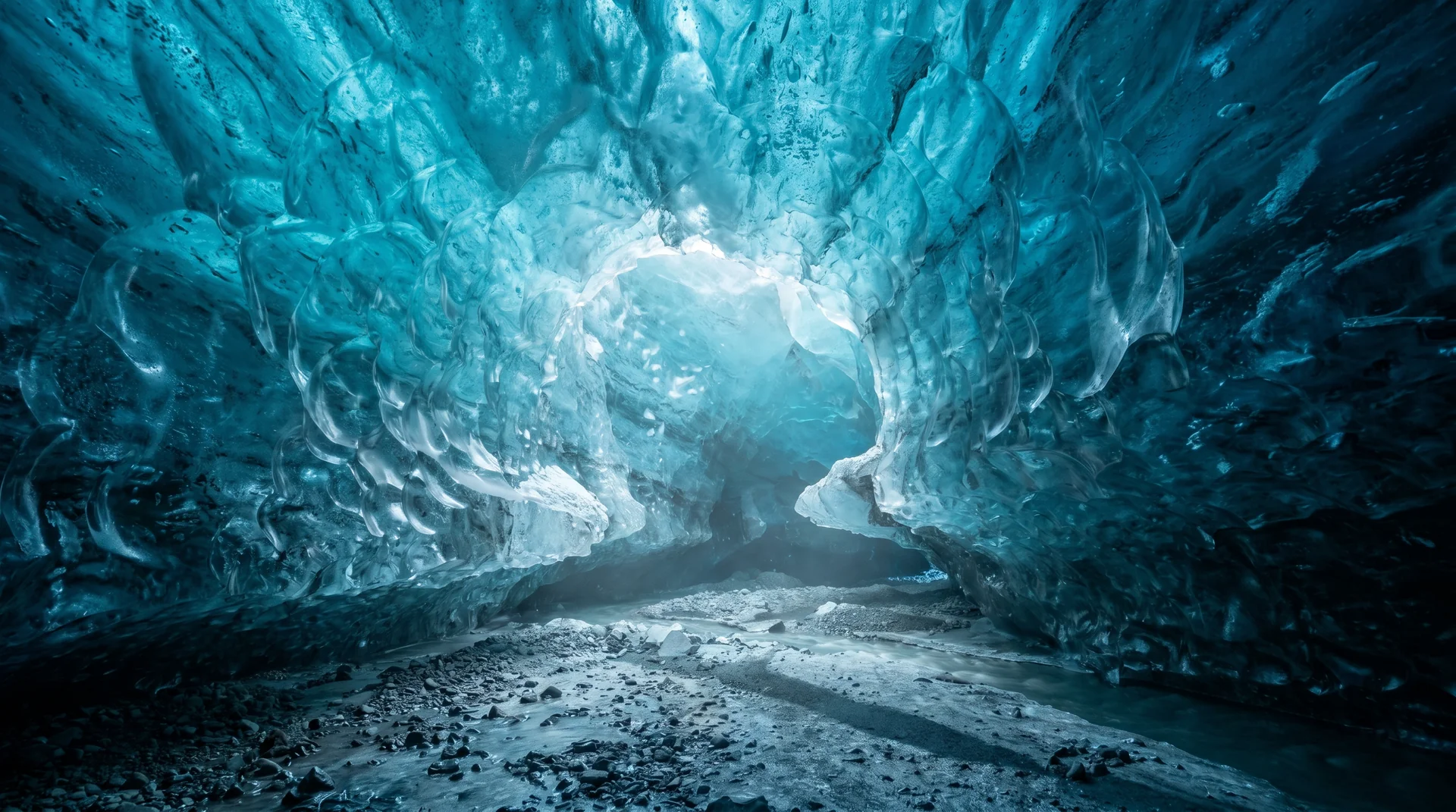
Ice Caves
Cathedral-blue chambers carved fresh inside Vatnajökull each winter — beautiful, ephemeral, and never the same cave twice.
What this experience actually feels like
You walk in on hard glacier ice, crampons biting, and the world flips into a slow blue glow. The walls hum faintly with meltwater. Light filters down through ten metres of compressed snow and arrives the colour of a clean swimming pool. Most caves are a 20-minute stop inside a 4-hour tour. The image that survives is the silence, not the ceiling.
Vatnajökull is the largest ice cap in Western Europe, and its outlet glaciers terminate in road-accessible tongues. Nowhere else in the world combines this much glacial ice with this much winter infrastructure.. Nowhere else in the world combines this much glacial ice with this much winter infrastructure.
Natural caves do not exist in the same form year-round. Operators scout fresh chambers each November as freeze returns. Anyone selling 'this exact cave photo' for July is selling you a man-made ice tunnel.
- —Travelers comfortable wearing crampons for an hour
- —Photographers who can shoot fast in low light
- —Anyone Iceland in midwinter and curious about how a glacier sounds
- —Claustrophobic travelers (chambers are tight)
- —Anyone hoping to wander glacier surfaces unguided
- —Trips outside Nov–Mar (no real natural caves exist then)
When this experience is real
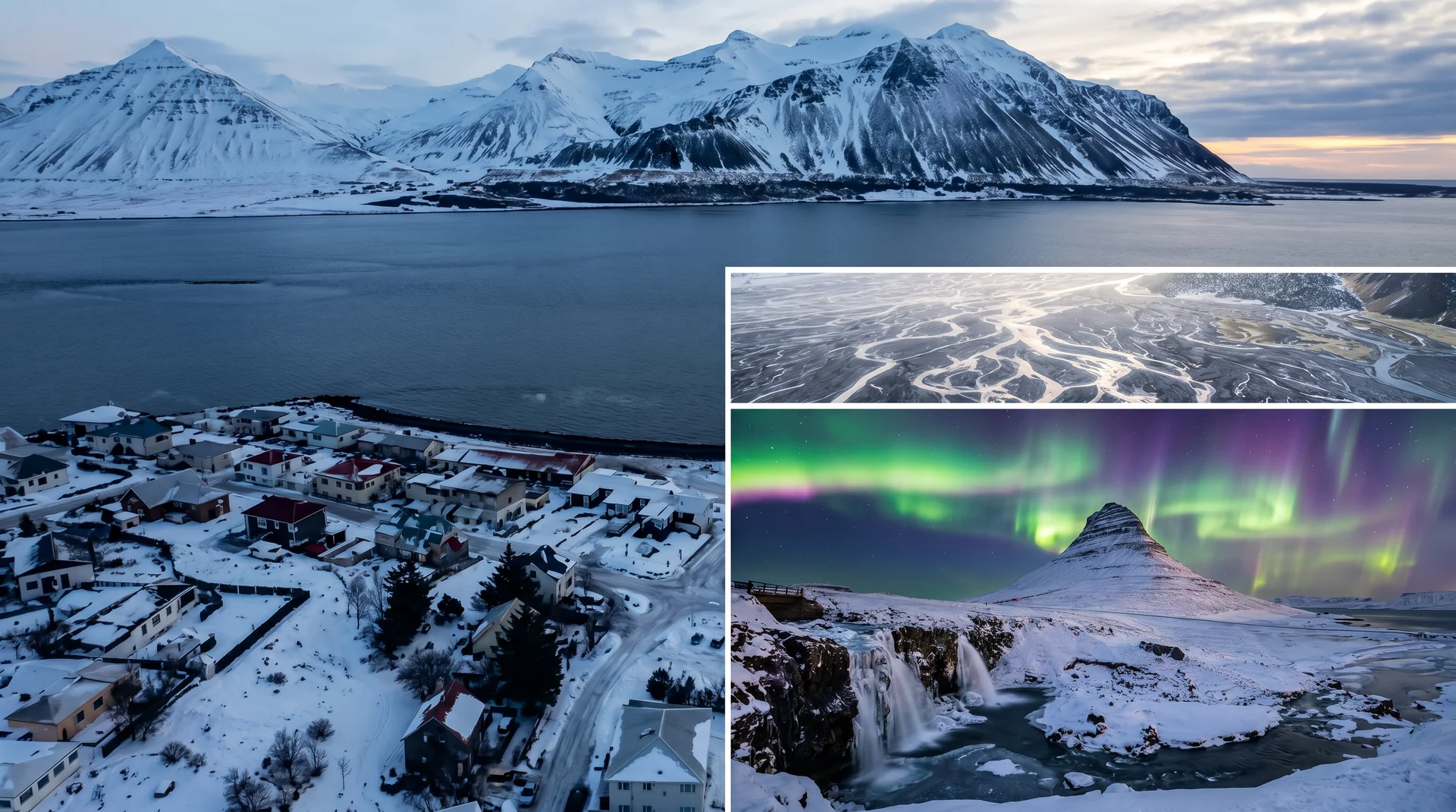
Early winter
First stable freeze, freshly scouted caves, fewest tour groups.
Peak winter
Reliable cold, deepest blue, also peak demand — book early.
Late winter
Still cold most years but melt accelerates; caves can close mid-week.
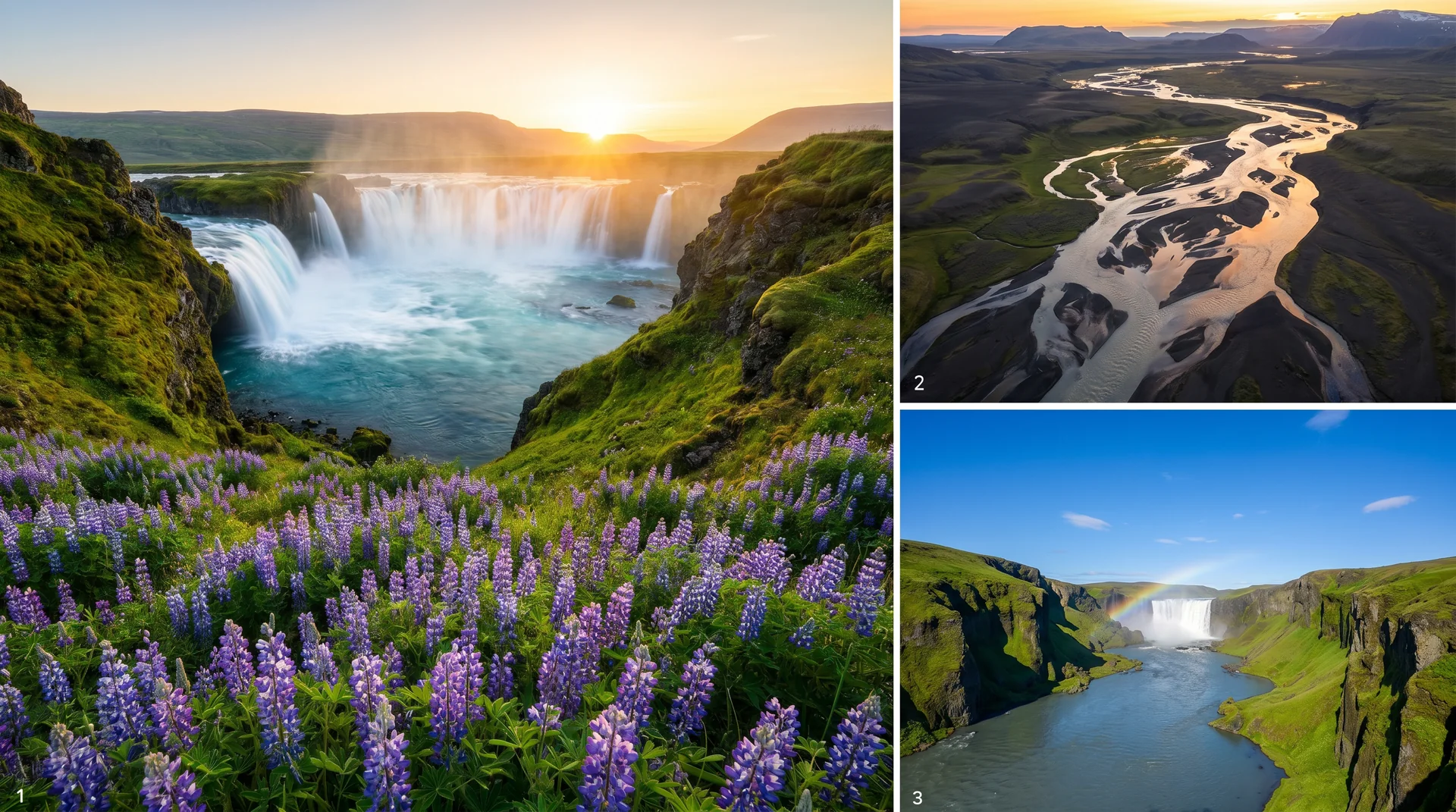
Summer
No natural cave product. Only the Langjökull man-made ice tunnel runs.
Best routes for this experience
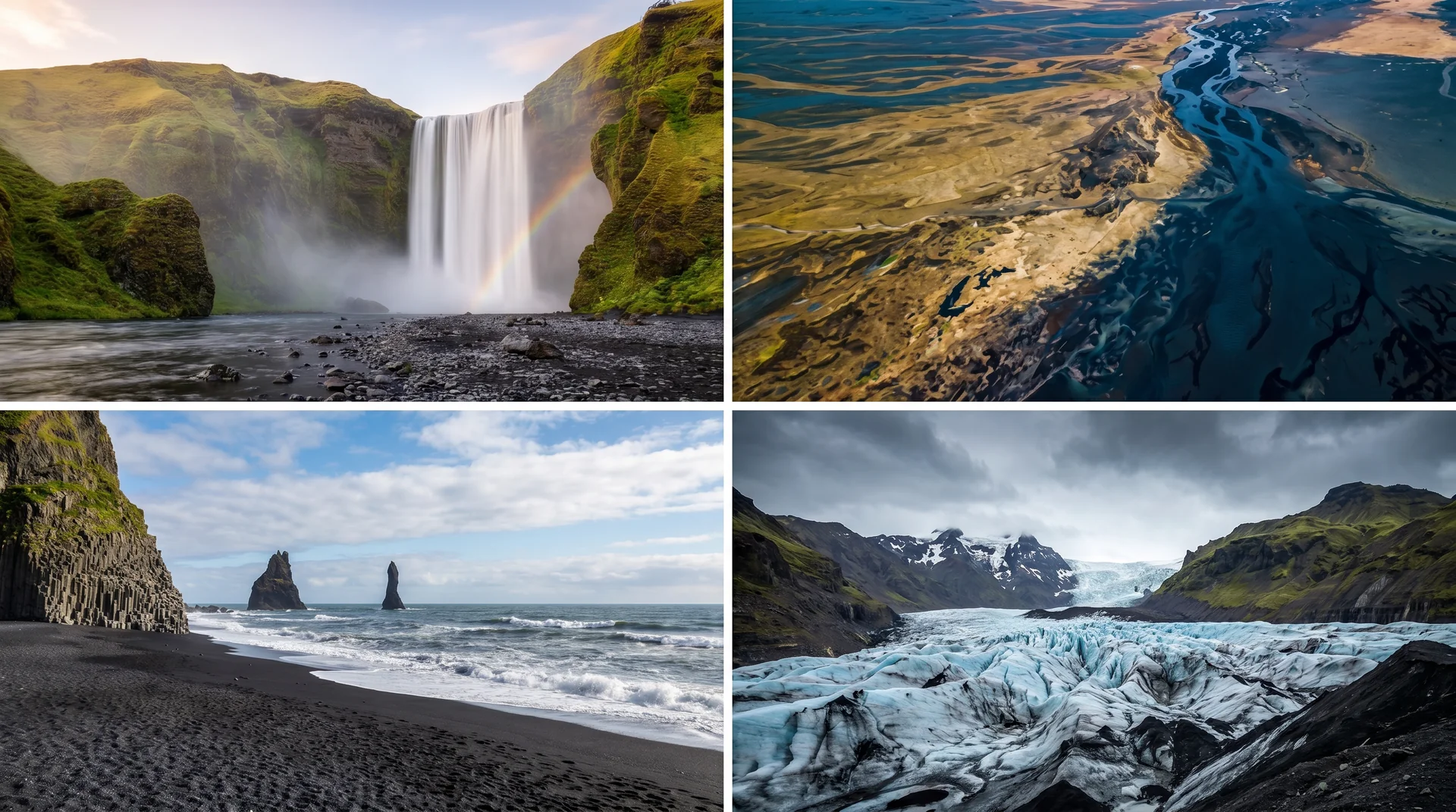
Winter South Coast to Jökulsárlón
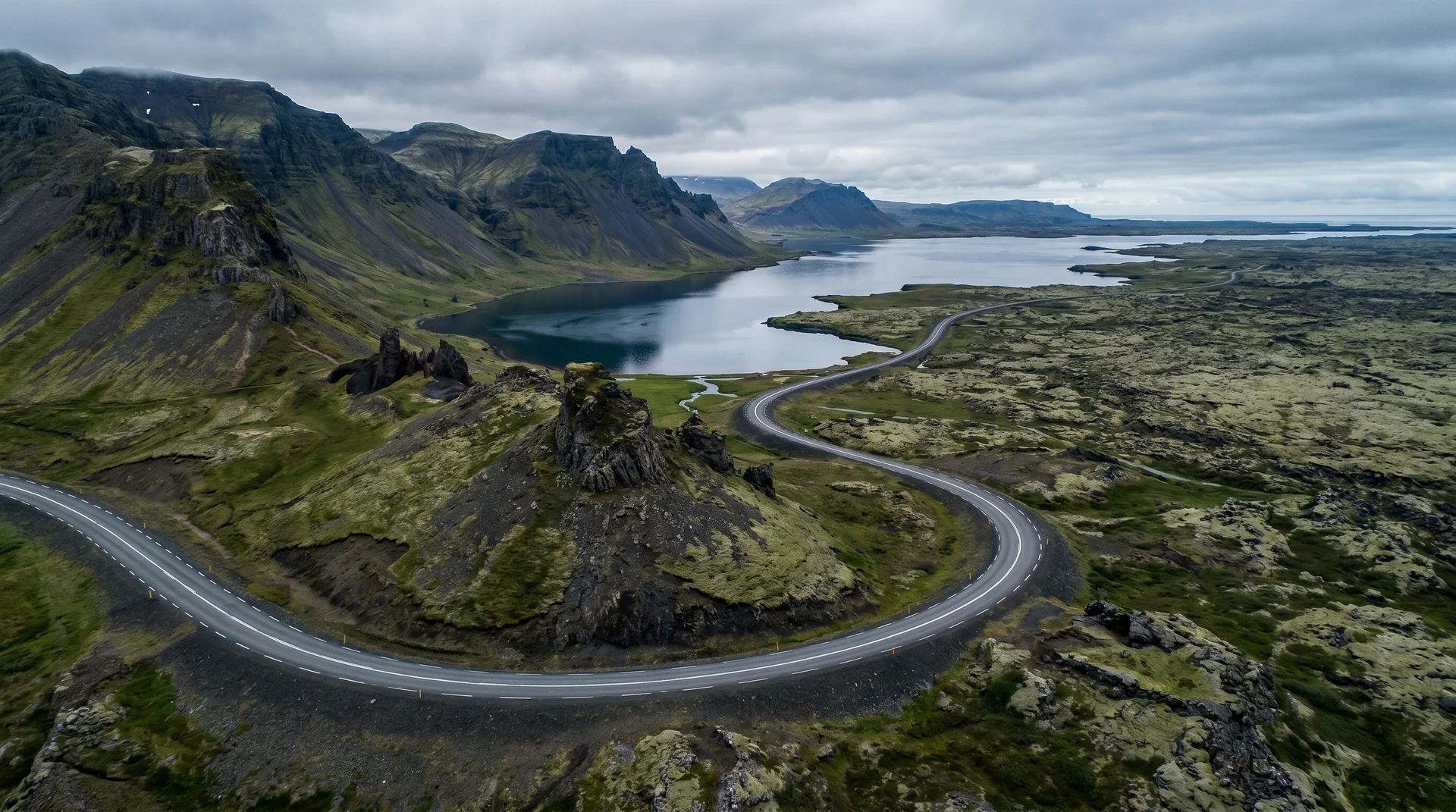
Winter Ring Road (clockwise)
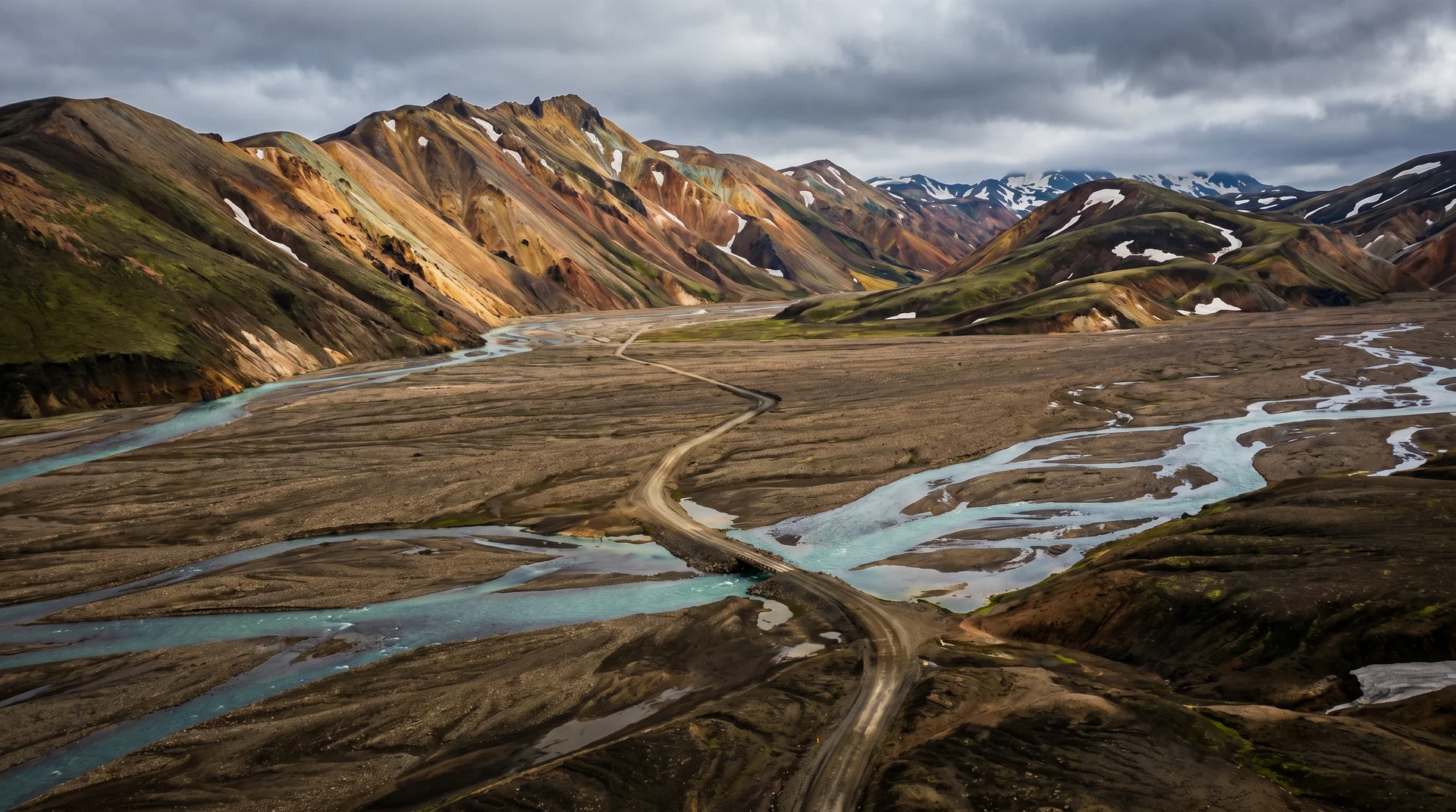
Highlands (summer alternative)
Where the experience is sharpest
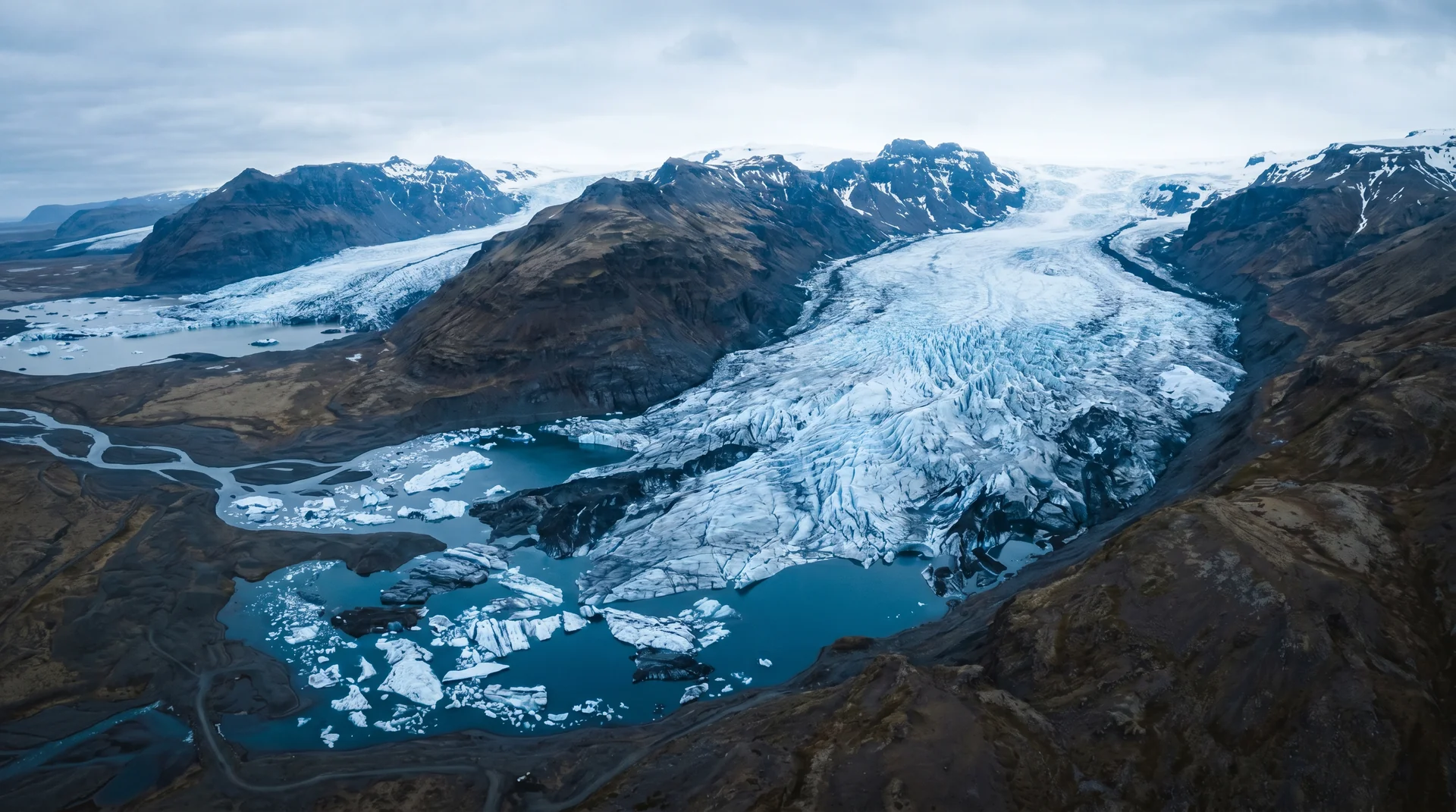
Vatnajökull
Western Europe's largest ice cap. All Skaftafell-area caves drain from here.
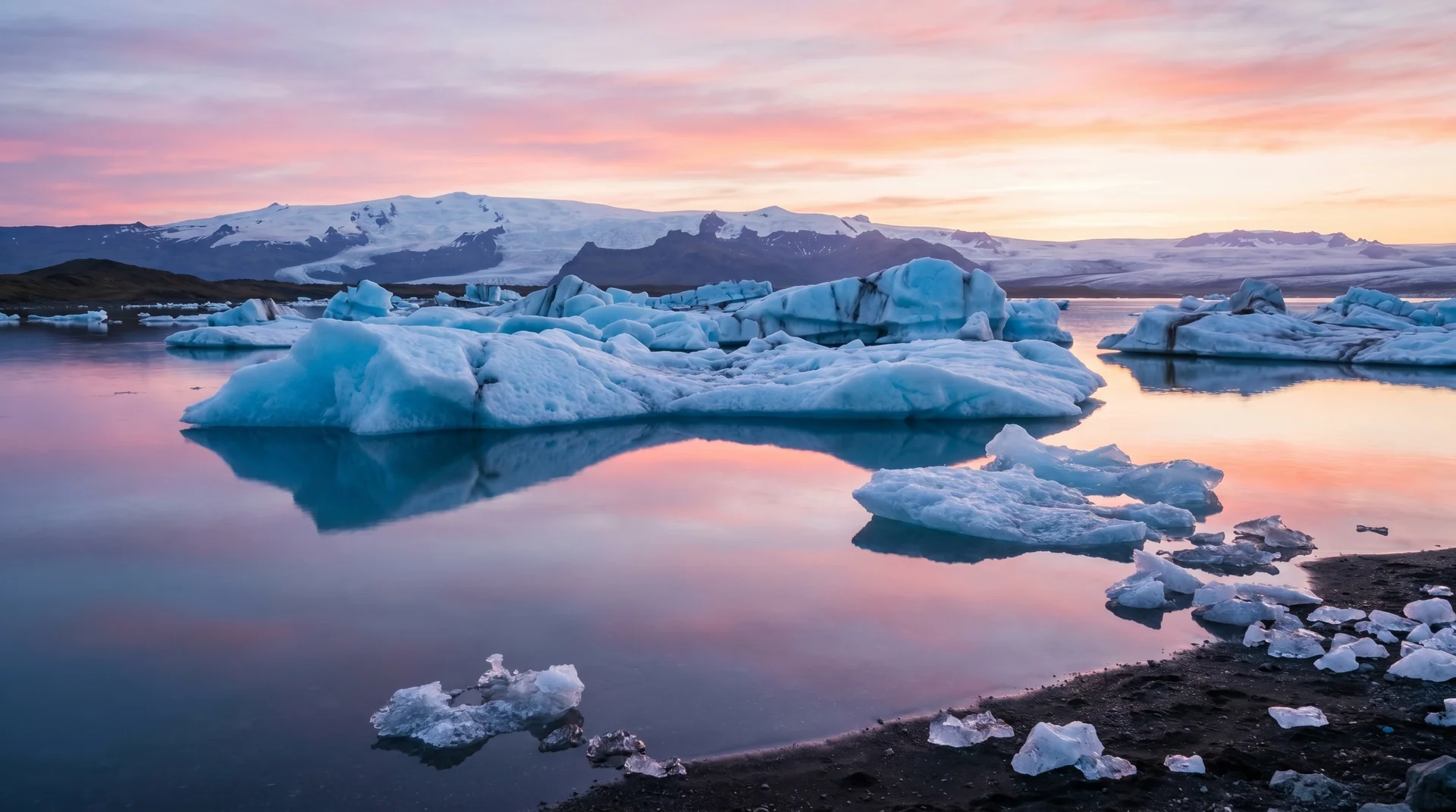
Jökulsárlón
Departure hub for Breiðamerkurjökull cave tours — and dramatic icebergs in their own right.
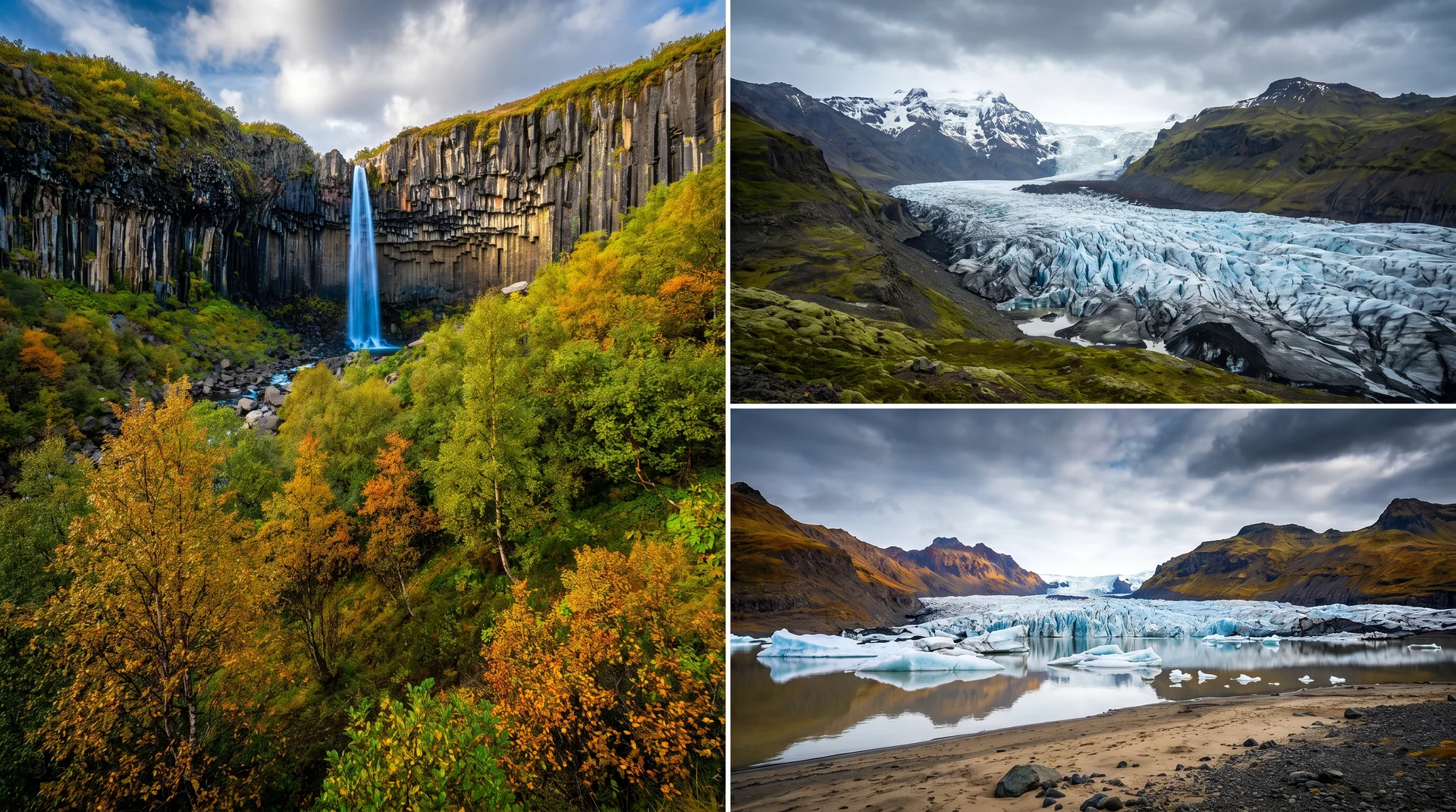
Skaftafell
Park HQ + visitor centre. Most operators stage their morning briefings here.
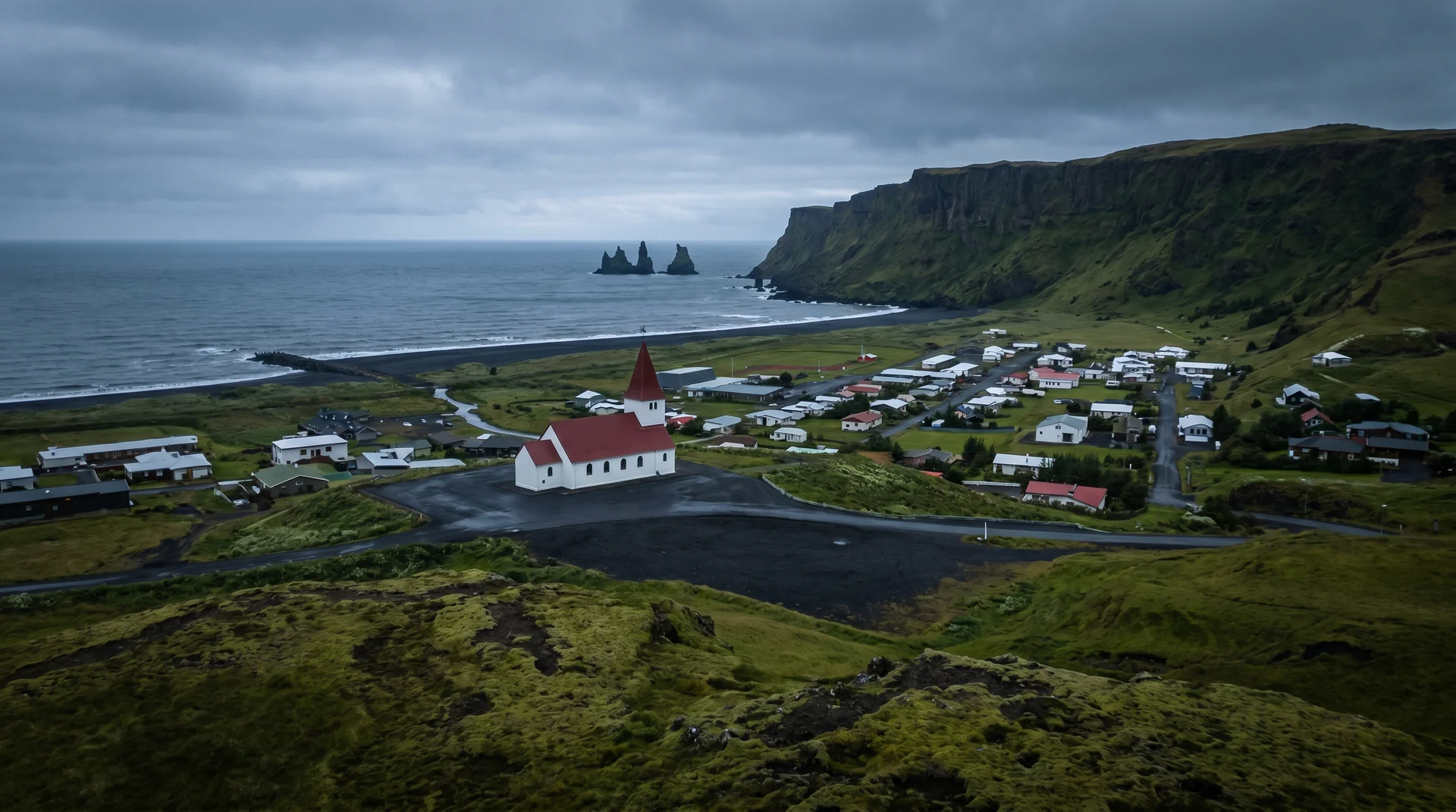
Vík
Closest village with overnight infrastructure. Katla-area caves depart from here.
What can go wrong, plainly stated
You do not enter unguided
Crevasses, falling ice, and unstable ceilings make solo entry genuinely lethal. Every legal cave visit is with a certified guide.
Blue is conditional
Caves in older ice glow electric blue. Caves freshly opened or ash-tinged from Katla can be milky grey. Operators won't tell you which until the morning of your tour.
Total time inside is short
A 4-hour tour usually includes 60-90 minutes on the glacier and 20-30 minutes inside the cave proper. Pace your camera work accordingly.
Warm spells cancel tours
Above 4°C with rain, operators close caves outright. Build a 1-2 day buffer into south-coast winter trips.
What to actually bring
- ·Crampons + helmet
- ·Ice axe (not always handed out — depends on operator)
- ·Harness (deeper-cave tours only)
- ·Waterproof outer layer (cave floors drip)
- ·Insulated waterproof boots — crampons clip to stiff soles only
- ·Wide lens + lens cloth (condensation fogs fast)
- ·Headlamp for the walk in
- ·Tripod with retractable rubber feet
- ·ISO 800–3200 range comfort
- ·Wide aperture (f/2.8 or wider)
- ·Patience for tripod queues at the iconic chambers
The terrain that makes it possible.
Locations and routes plotted against weather-sensitive zones, dark-sky regions and seasonal access. Tap anything to open it in the Explorer.
Common mistakes — read this first
Booking a July ice-cave tour
What you'll get is a man-made tunnel in Langjökull. Real natural caves run mid-November through late March, no exceptions.
Self-driving onto the glacier tongue
Unmarked crevasses kill people every few years. The 20-minute walk from the tour van saves your life.
Assuming weather affects only access
Heavy rain melts the entrance overnight. A confirmed booking can be cancelled the morning of, even with no road closures.
Underestimating cold inside
Caves hover around -3°C with damp air. It feels colder than the same temperature on the surface. Layer like you're standing still.
Conditions, right now
Related experiences