Skaftafell
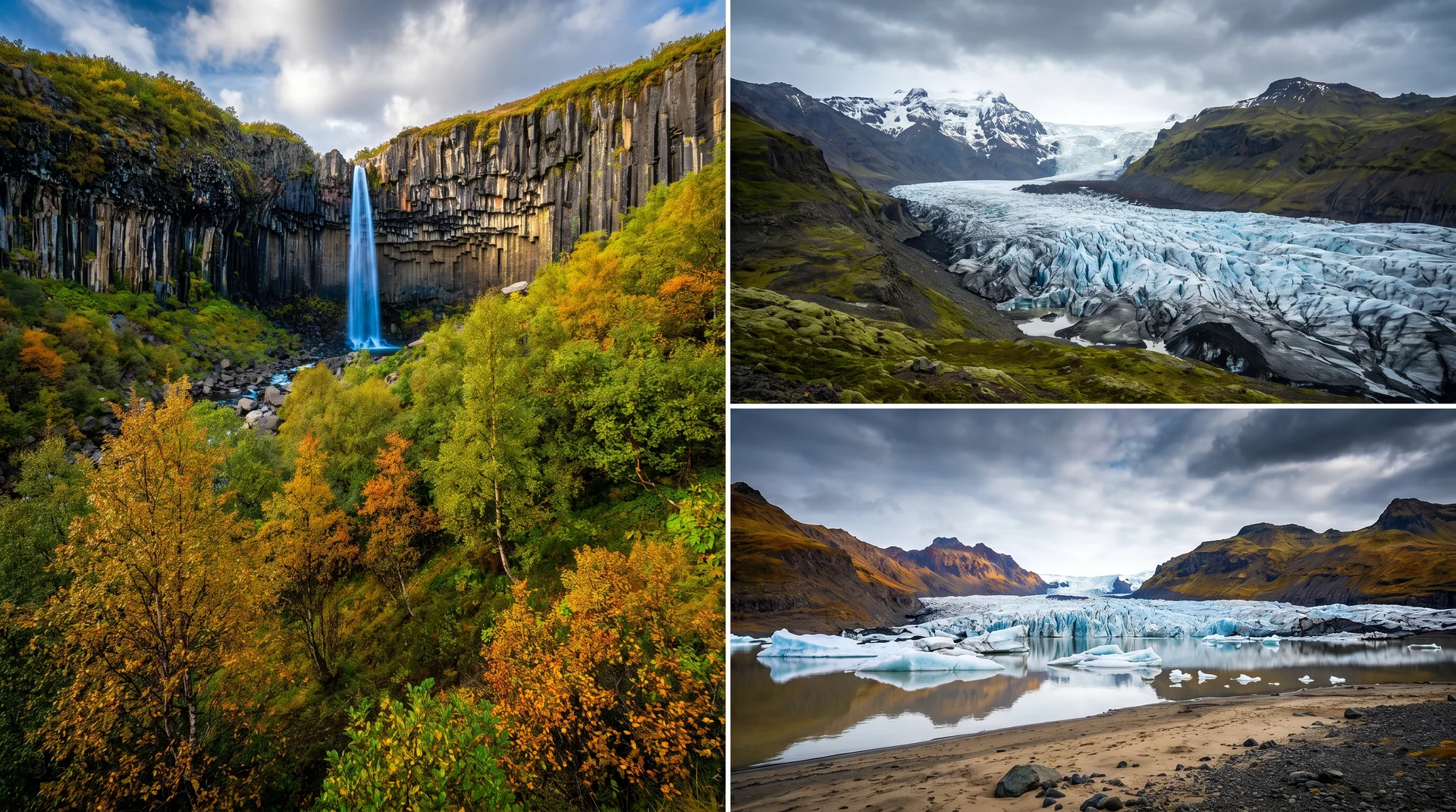
The hiking nucleus of Vatnajökull National Park — three glacier tongues, a basalt-column waterfall, and trails that go from 30 minutes to a full day. The natural base camp for everything in the south-east.
Why this place matters.
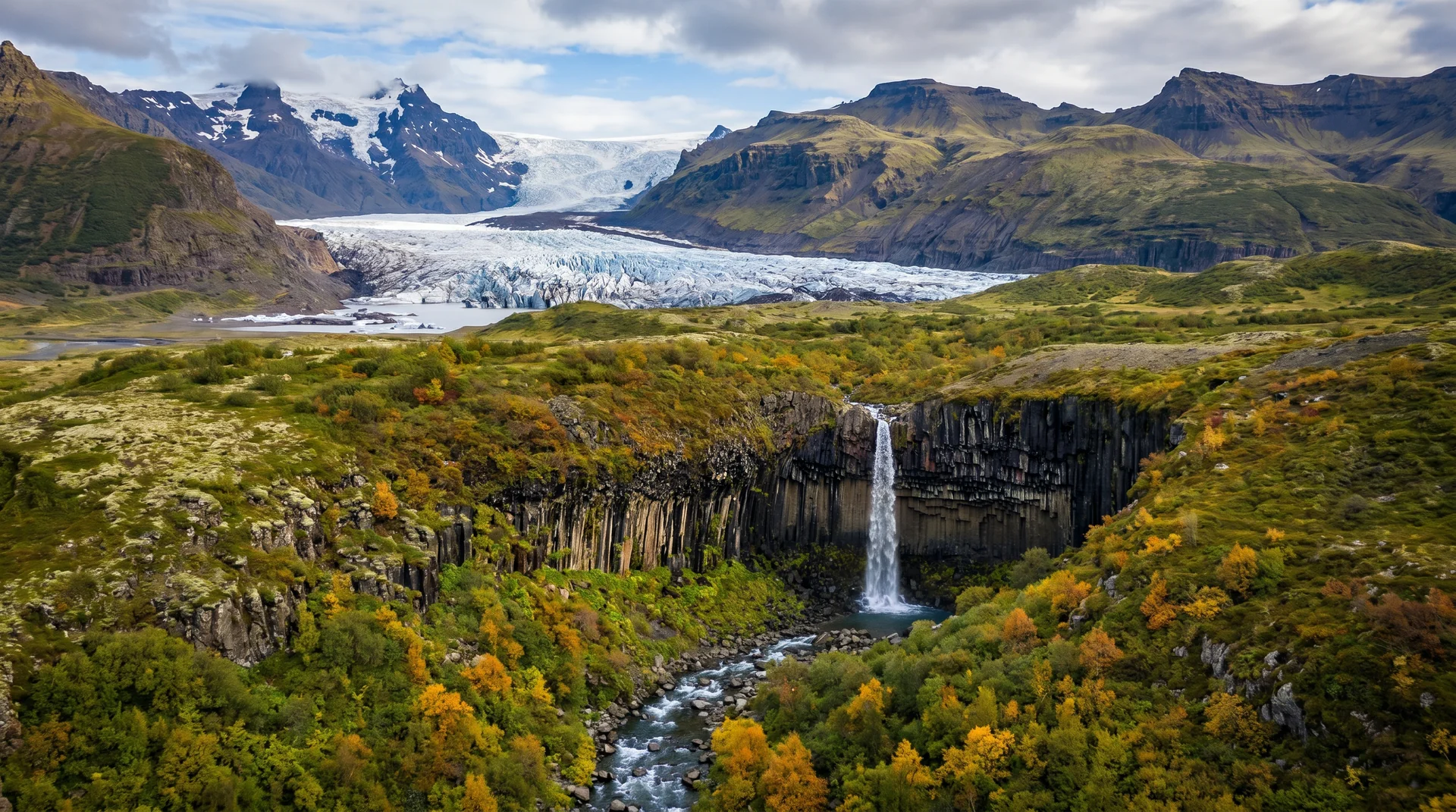
Skaftafell sits between three glacier tongues — Skaftafellsjökull, Svínafellsjökull, and Falljökull — under the bulk of Hvannadalshnúkur, Iceland's highest peak. The visitor centre is the trailhead for everything.
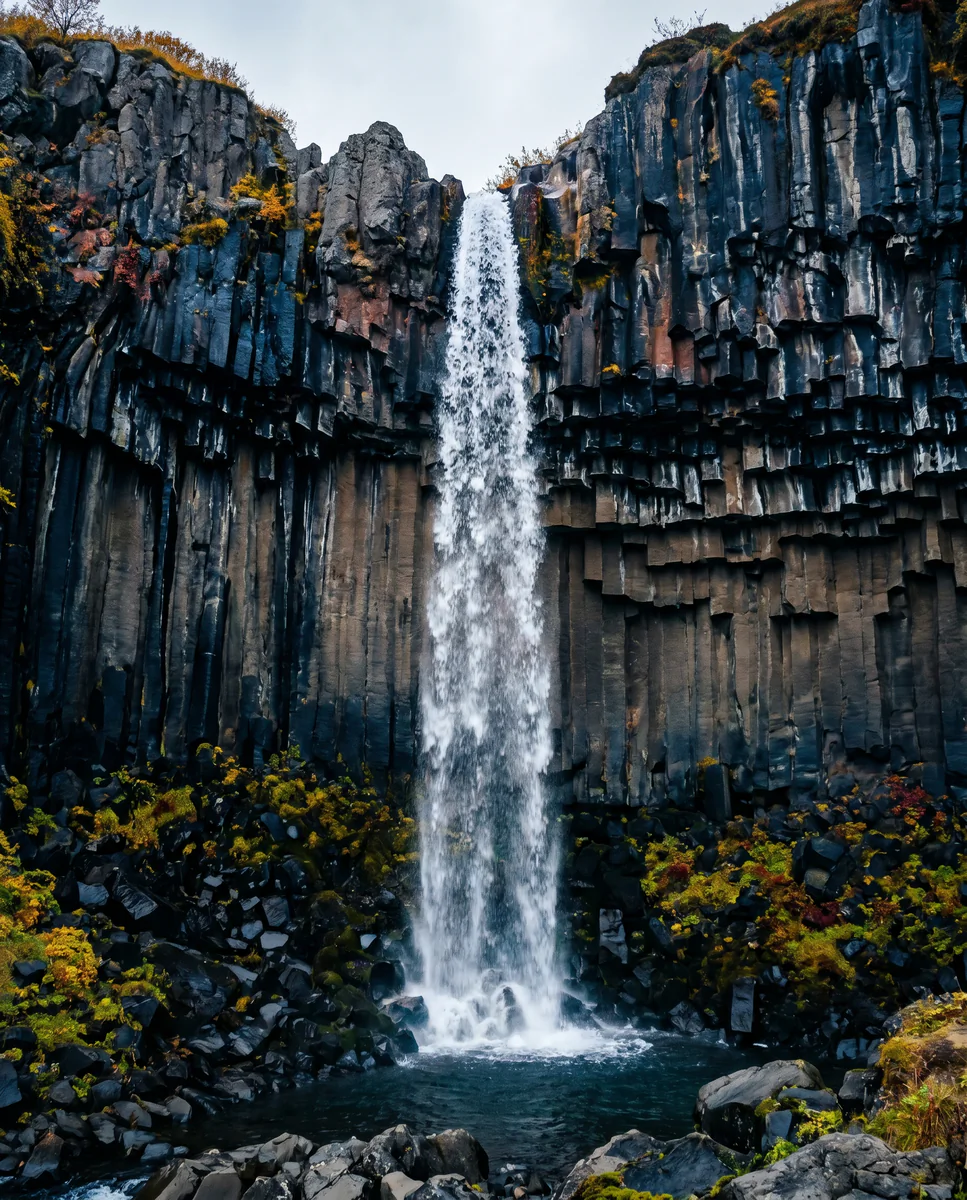
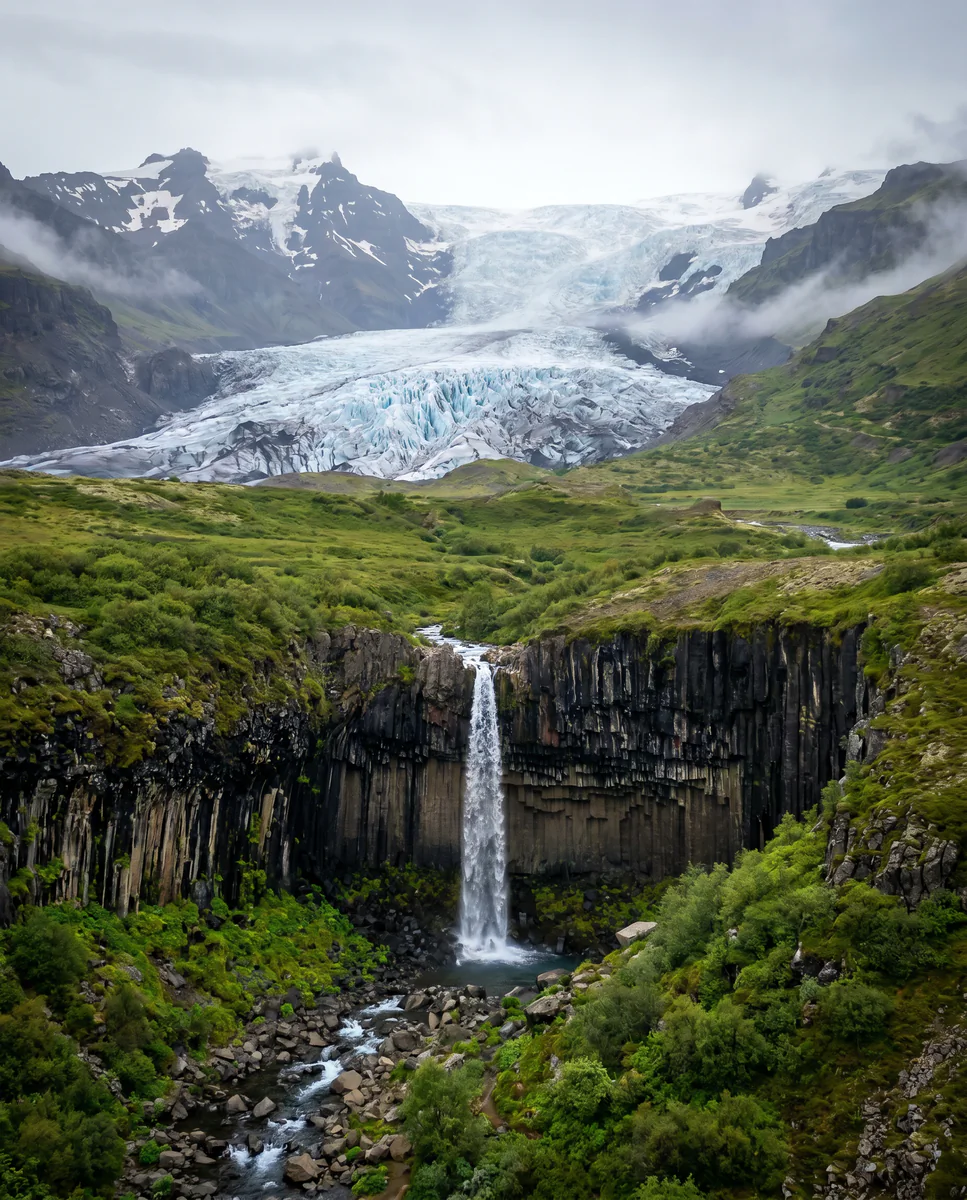
The canonical day: 1.5 km walk to Svartifoss (the basalt-column waterfall on the magazine covers), 2 km loop past Sjónarsker viewpoint, and back through the birch forest. If you have a full day: hike to Sjónarnípa for the glacier tongue overhead view (4h RT) or join a guided glacier walk on Falljökull. Two campsites and a small café handle the night.
South-East · Vatnajökull NP entrance.
On Route 1 between Vík (2h west) and Höfn (1h 30m east).
Worth visiting — read the fine print.
Honest, not cynical. These are the things returning visitors tell first-timers.
ISK 1,000 / car. Pay at the machine. Toilets, café, gear shop on site. Free elsewhere isn't really an option here.
1.5 km uphill from the visitor centre. 45-min climb. Worth it. Crowded 11am–3pm; better early morning or evening.
4h RT to the glacier tongue overhead view. The viewpoint is exposed — wind and cloud can close the panorama within minutes.
The visible ice fronts look stable but calve unpredictably. Guided walks only on the glaciers themselves.
The Skaftafell café is small. Larger meals at Hotel Kverk or Hotel Klaustur. Vík (2h west) has supermarket prices.
Vatnajökull NP requires a drone permit (online). Some areas are no-drone zones.
When the place is itself.
Lower trails open year-round. Svartifoss path icy Nov – Mar (microspikes useful). Sjónarnípa and higher trails are best Jun – Sep.
Light, shaped by ice.
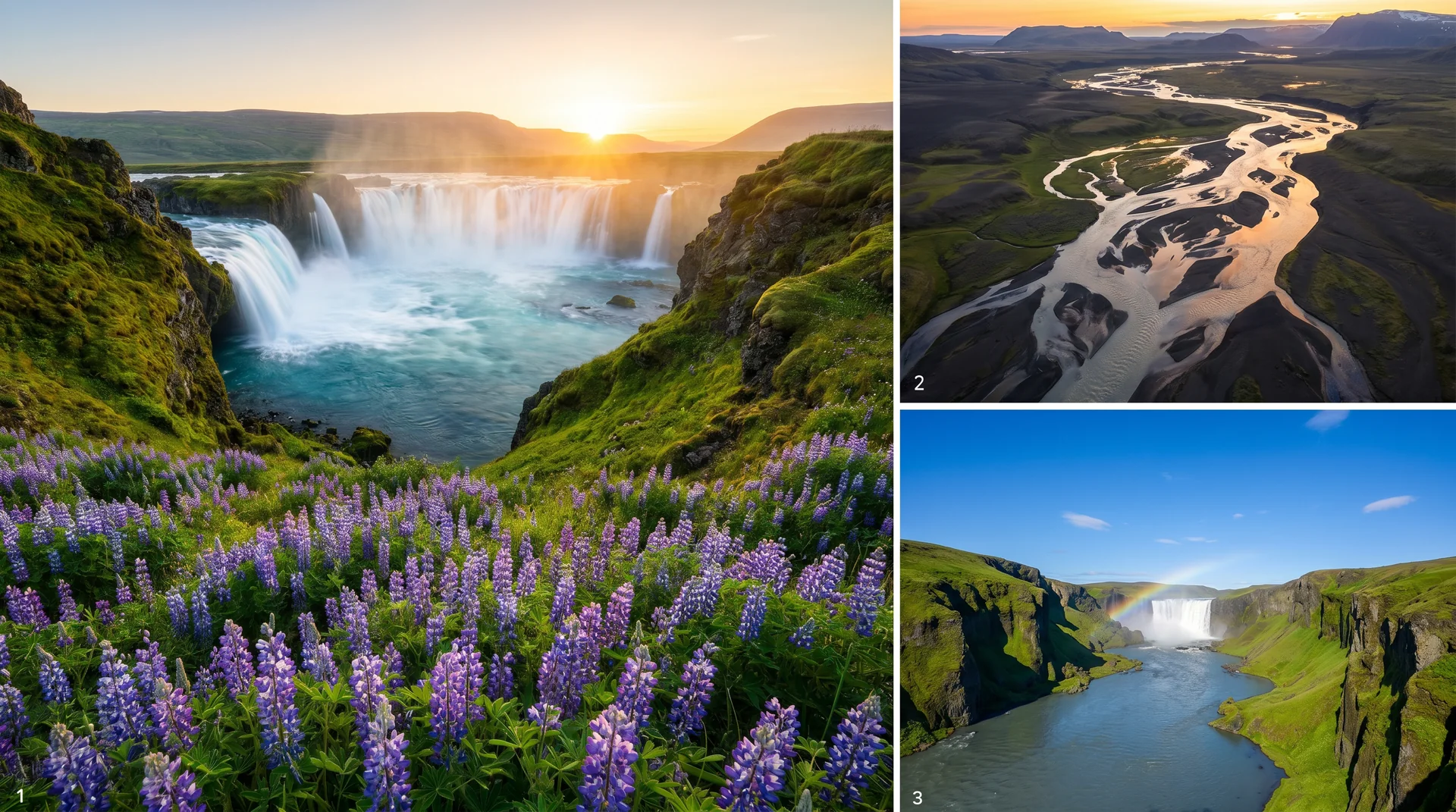
Basalt columns frame the falls. Sunlight reaches the basin 1pm – 4pm summer. Side-light is best.
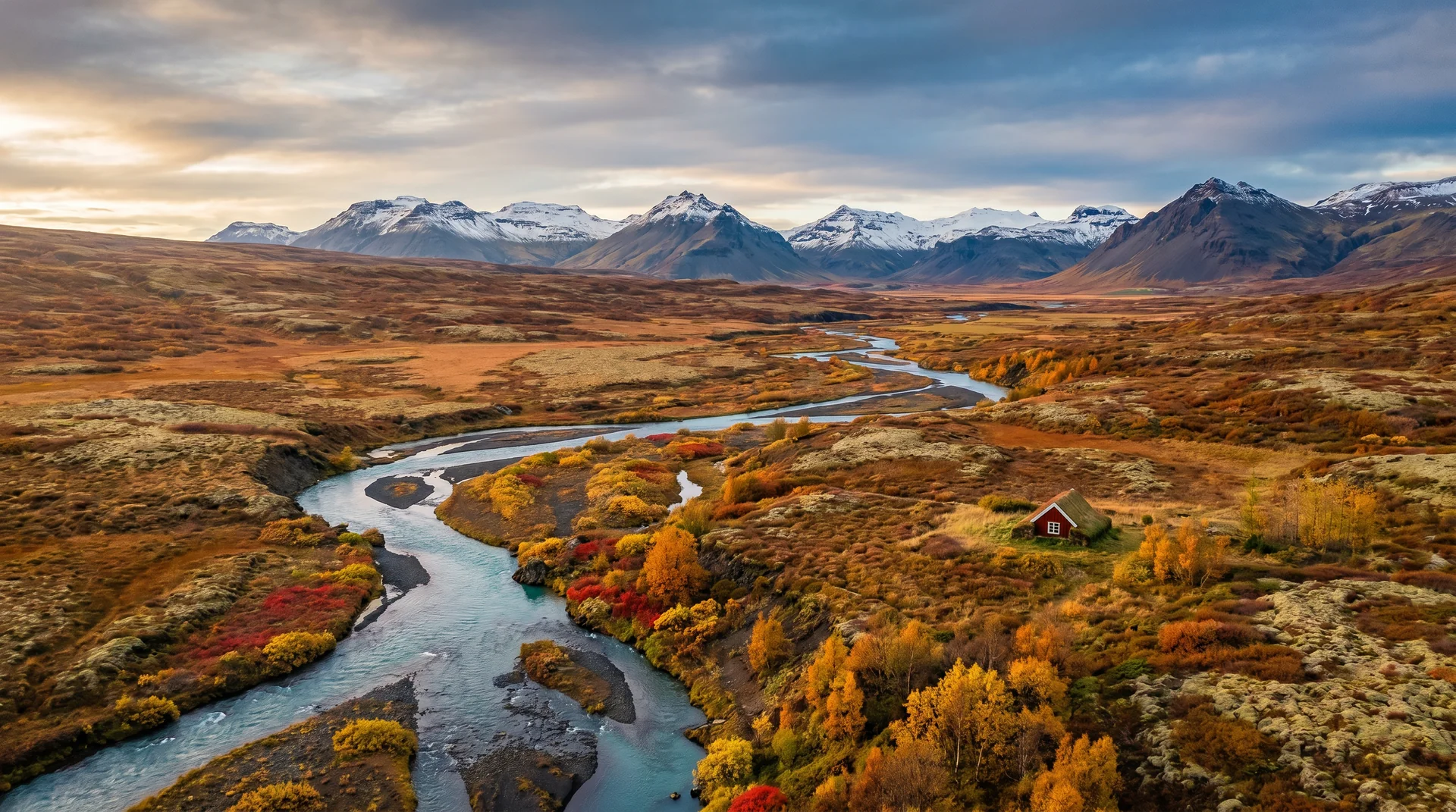
4h RT hike. Best afternoon overcast — direct sun blows out the ice. Wide angle + space for sky.
Short 30-min walk from visitor centre. The blue ice front against grey moraine. Tripod recommended.
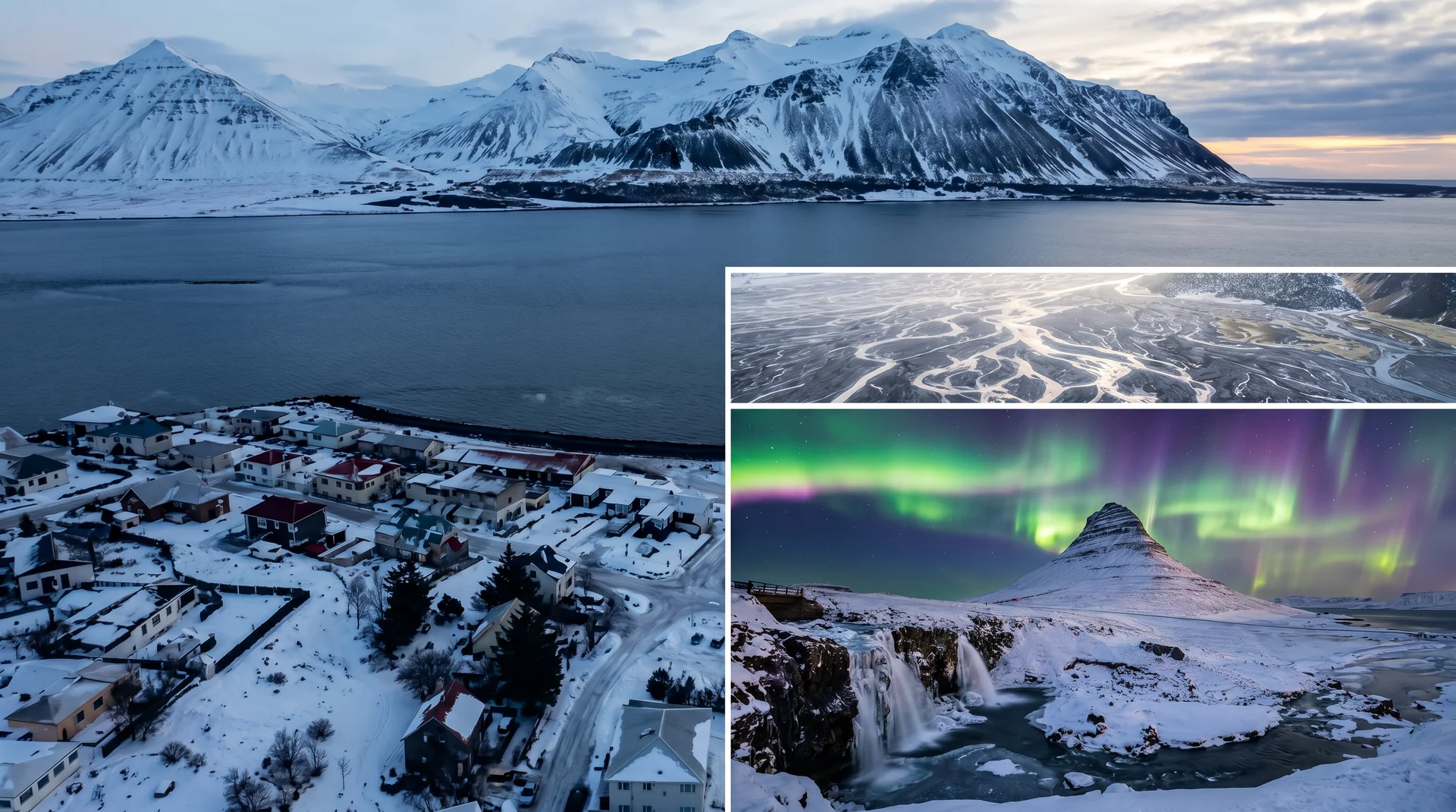
Forest paths near the campsite. Underrated. Soft light, autumn colour late Sep.
Getting there, calmly.
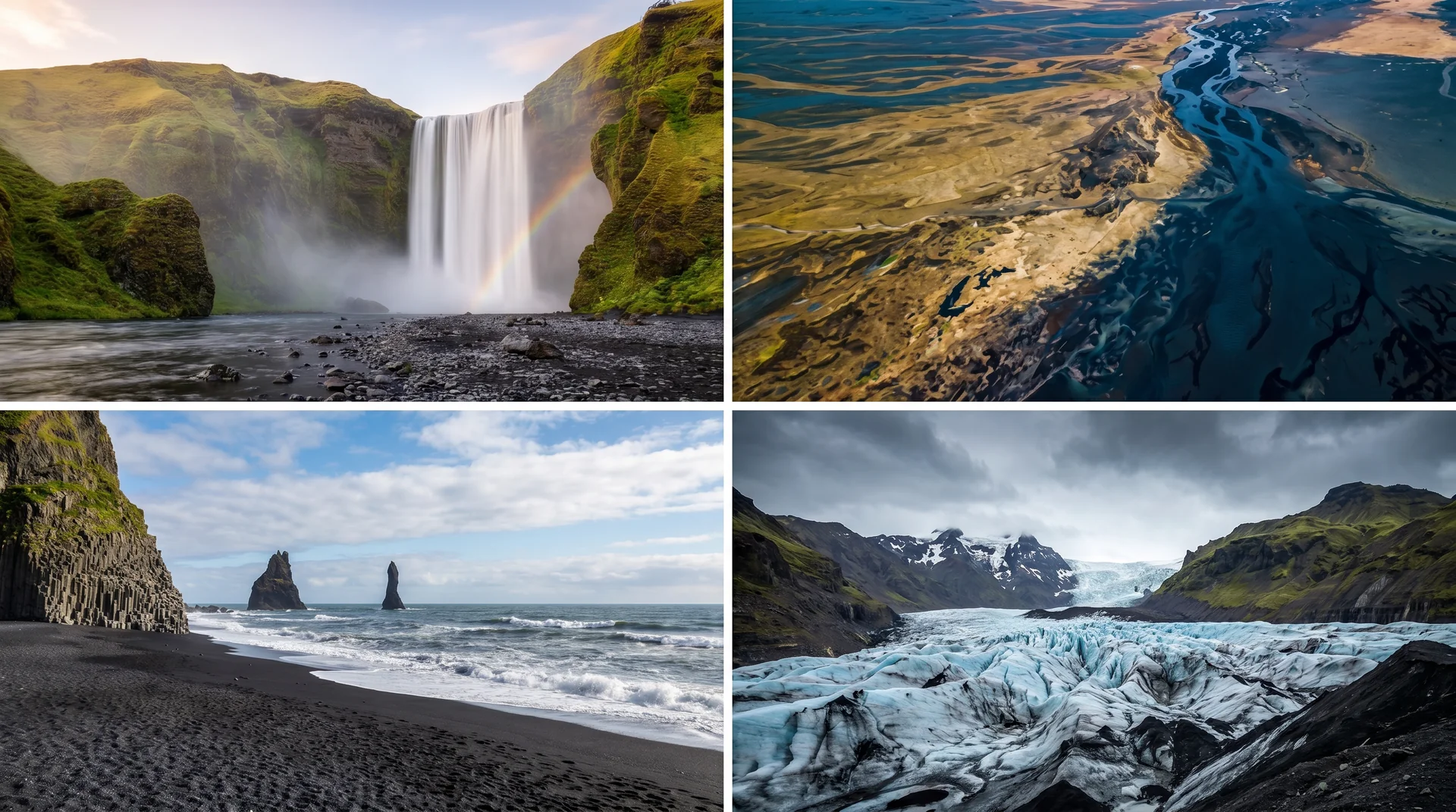
The place, four ways.
Within an hour.
- SvartifossBasalt-column waterfall
- JökulsárlónGlacier lagoon
- Diamond BeachIceberg-strewn black sand
- VíkLast fuel + supplies west
- HöfnLangoustine town · east base
It lives on these routes.
Read this place differently.
What the place is doing right now.
Make Skaftafell part of your expedition.
Open it inside the Explorer to see it in context with terrain, season, and conditions — or plan a route that passes through.