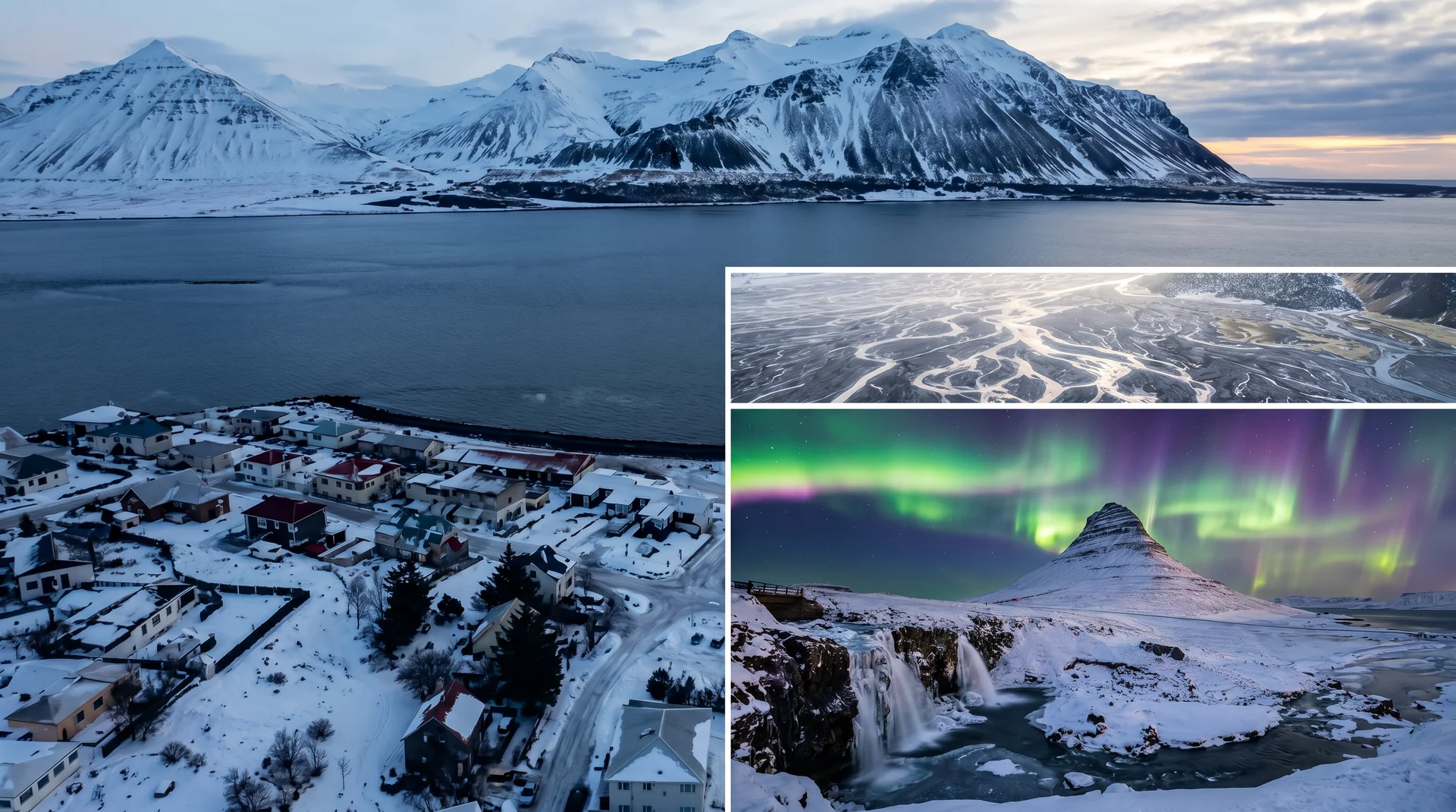
Winter
The country contracts. Four hours of daylight, aurora-rich nights, roads that test you.
What winter feels like.
Iceland in winter is not a smaller version of itself — it's a different country. The road network thins to its coastal spine, the highlands close, the sun arcs low without ever quite rising. What you trade in access, you gain in atmosphere: blue-hour light that lasts all day, ice caves carved fresh each November, and skies that, on the right Kp night, do things you'll struggle to describe later.
The environment, structured.
What's actually possible right now.
- South Coast loop
- Snæfellsnes peninsula
- Reykjanes geothermal
- Aurora chasing
- Ice caves
- Reykjavík + Golden Circle
- Highlands · F-roads
- Westfjords interior
- Full Ring Road in 5 days
- Detailed schedules
- Mid-January quiet
- Blue hour at 14:00
- Empty Þingvellir at 9am
- Húsavík winter coast
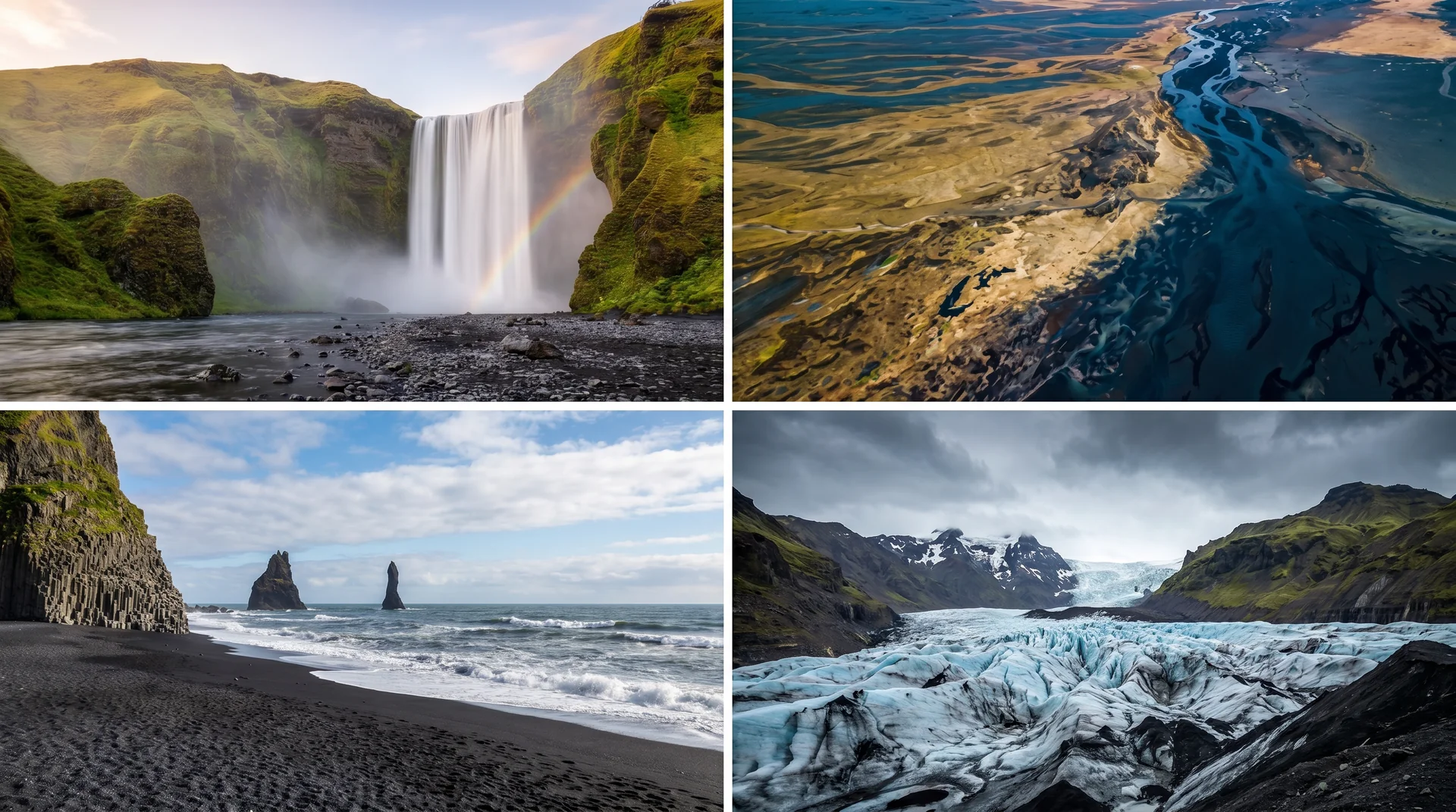
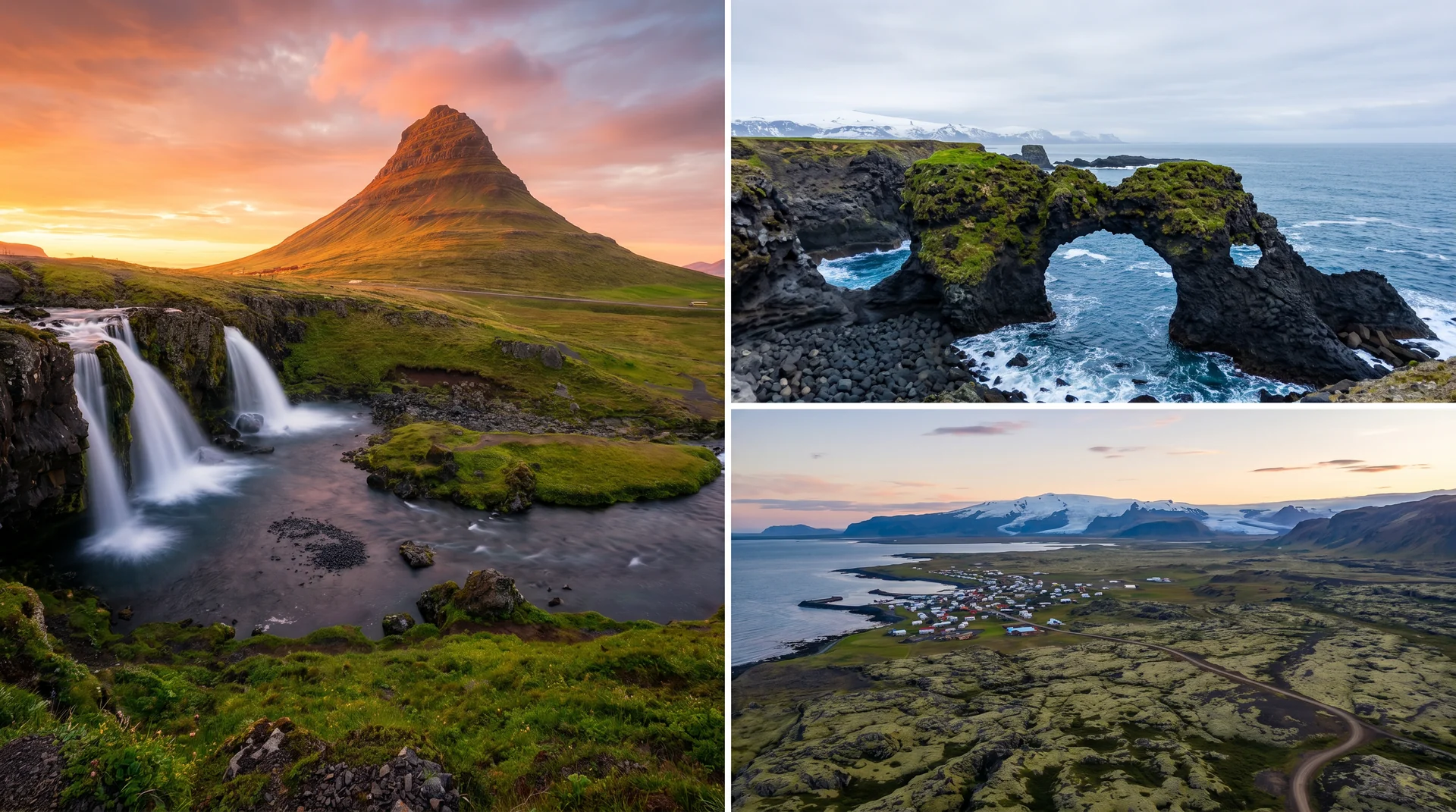
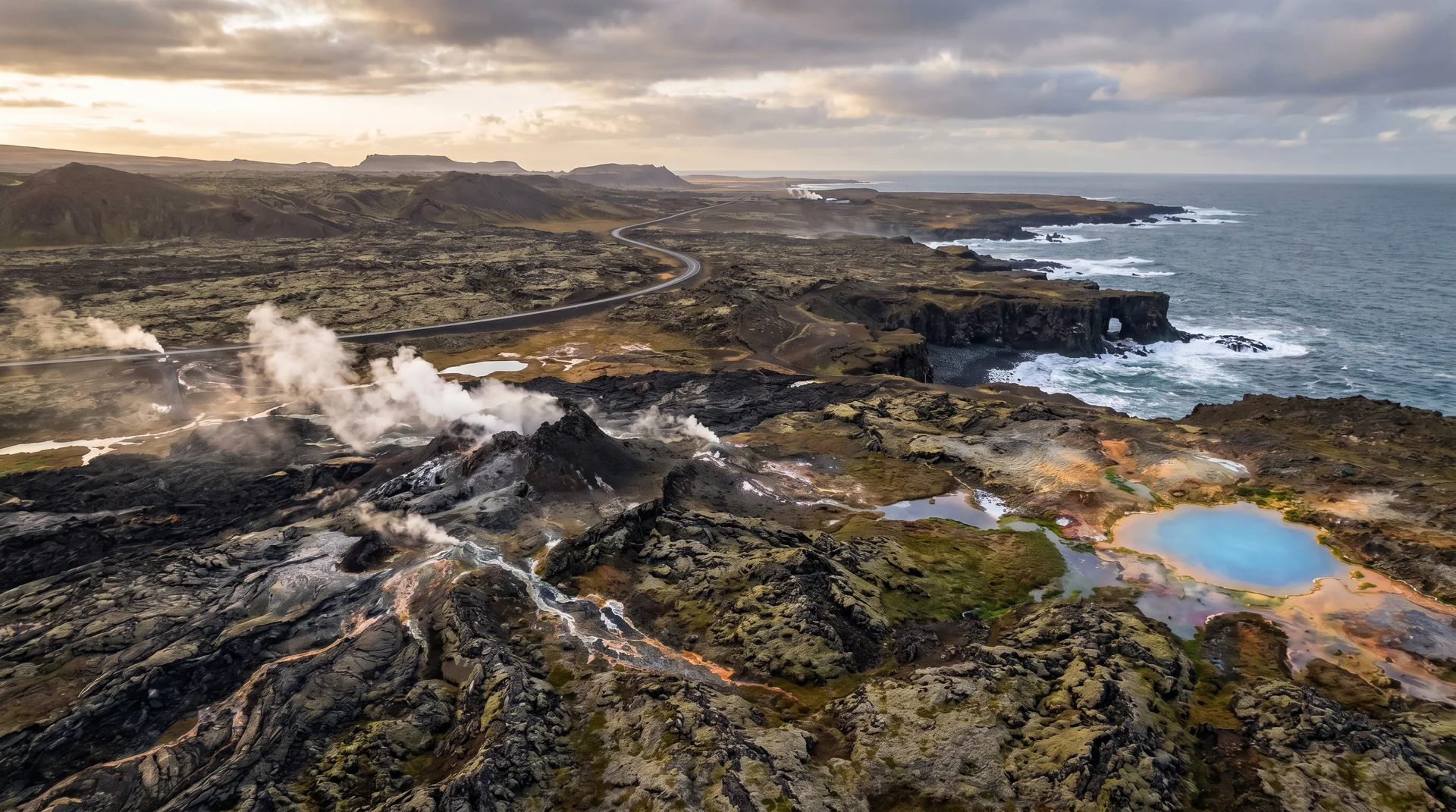
What this season unlocks.
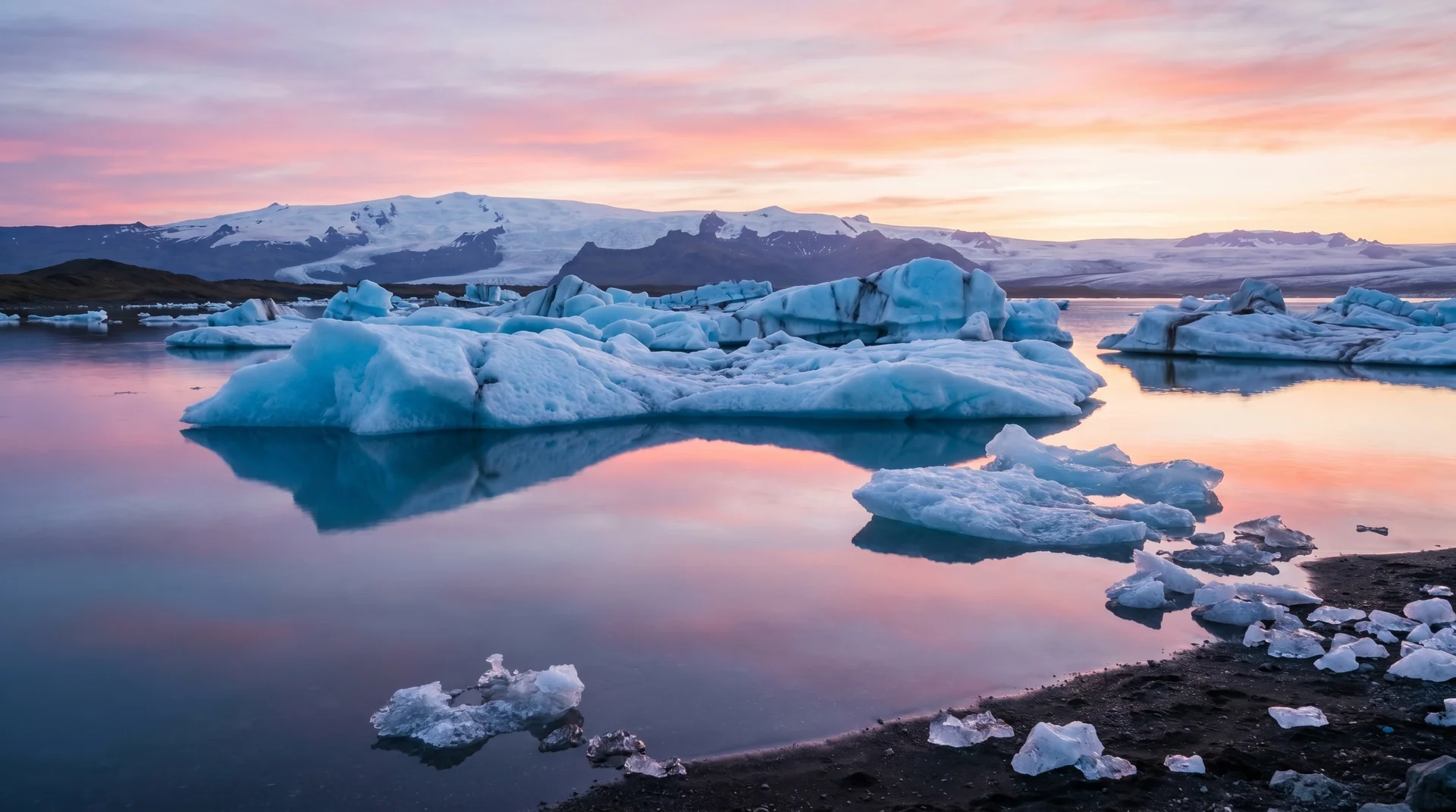
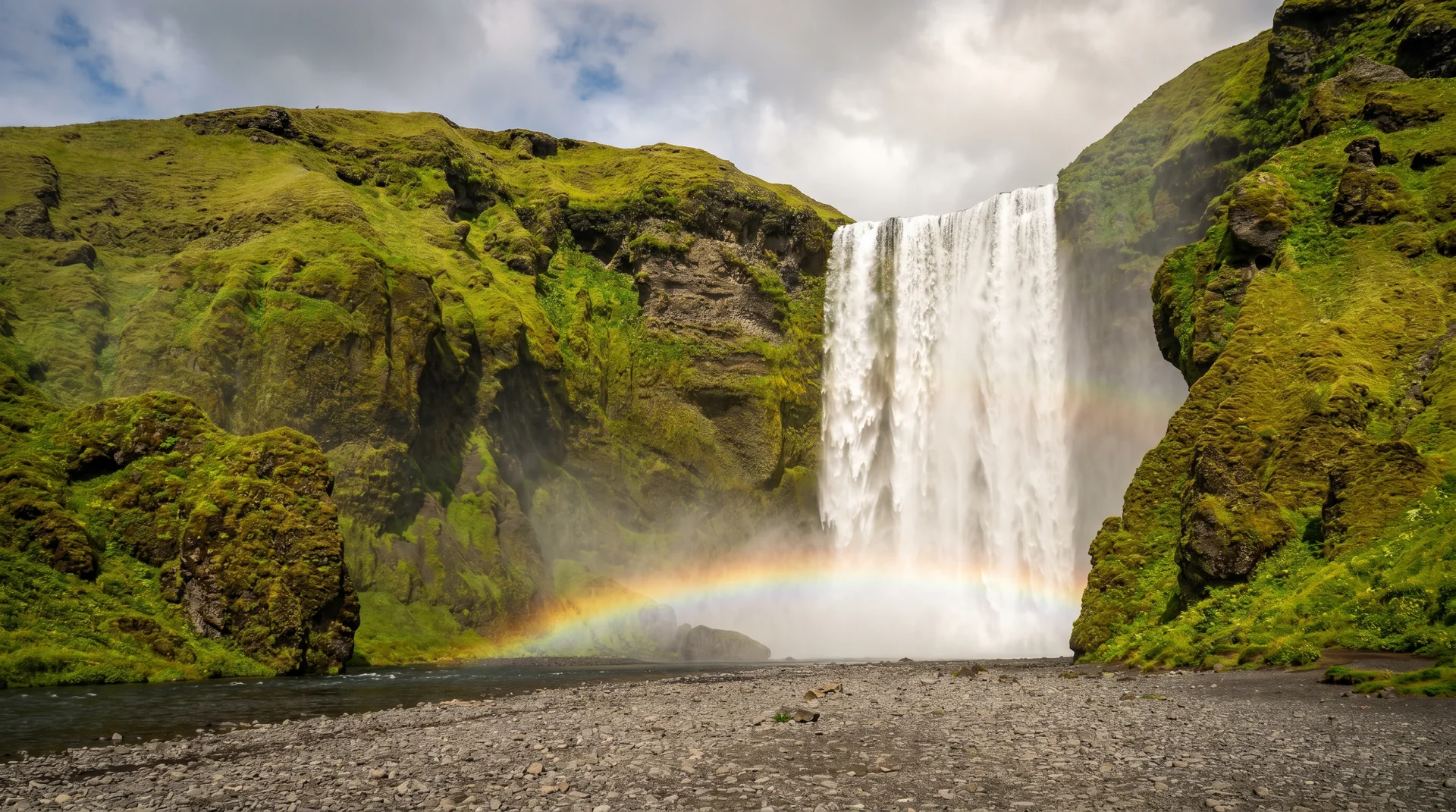
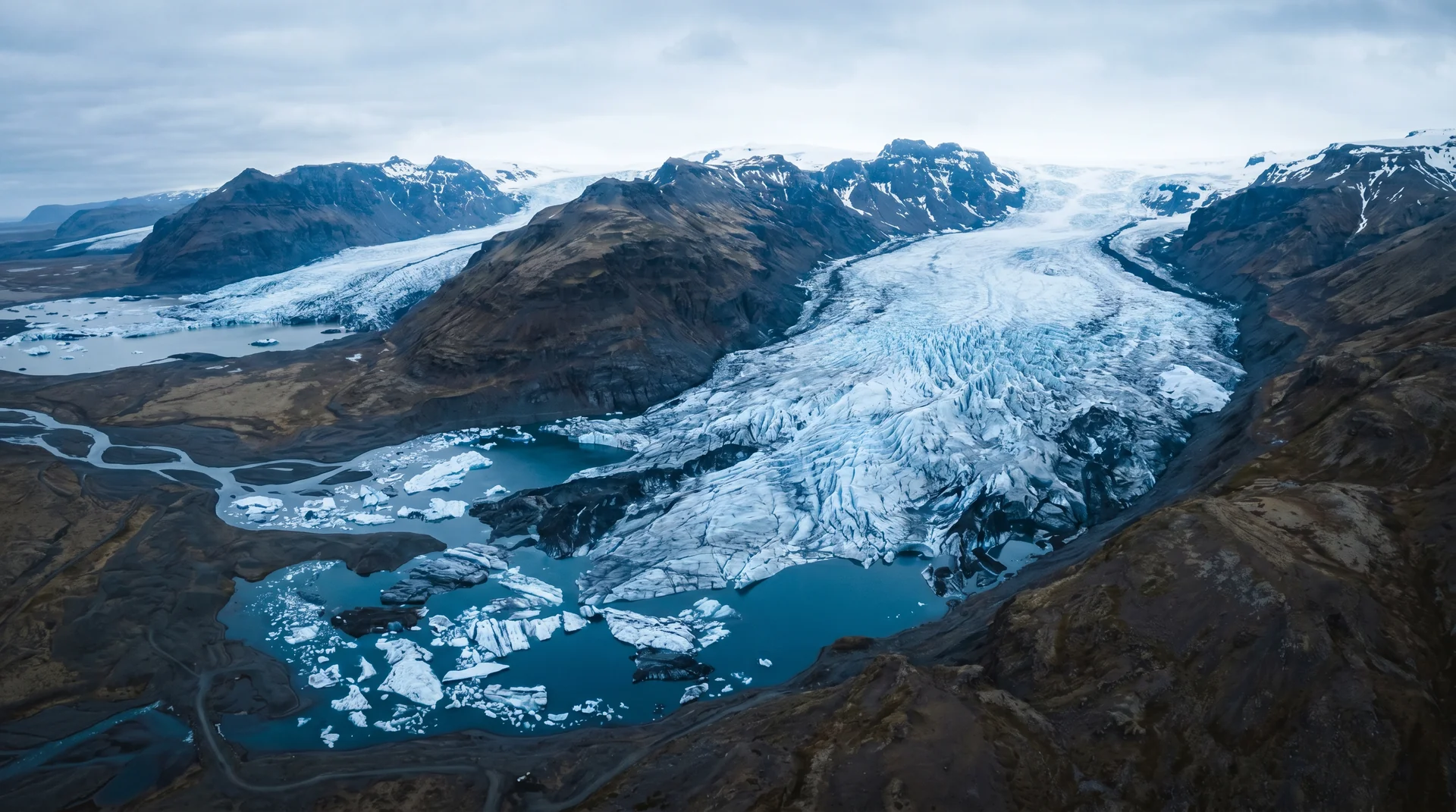
Where winter takes you.
The places above, pinned against the rest of the island.
What people get wrong about winter.
Helpful, not fear-based. These are the patterns returning visitors warn first-timers about.
Closures change hourly. Check before every leg.
Gusts above 20 m/s rip rental doors clean off.
Move to the next valley — clouds are local.
Weather will rewrite at least one day. Budget it.
Sand and ash insurance pays for itself in March.
Roads ice the moment the sun drops. Be parked by then.
Light, shaped by season.
Sun stays low — the entire short day is golden/blue hour.
Moonless nights, Kp 3+, clear ridges to the north.
Iceberg translucency richest under low ambient light.
Approaching weather + low sun = the photos people share.
What to bring.
What the island is doing right now.
Read the island another way.
Build a winter expedition.
The planner sequences routes, vehicles, and conditions for winter's specific weather windows and accessibility.