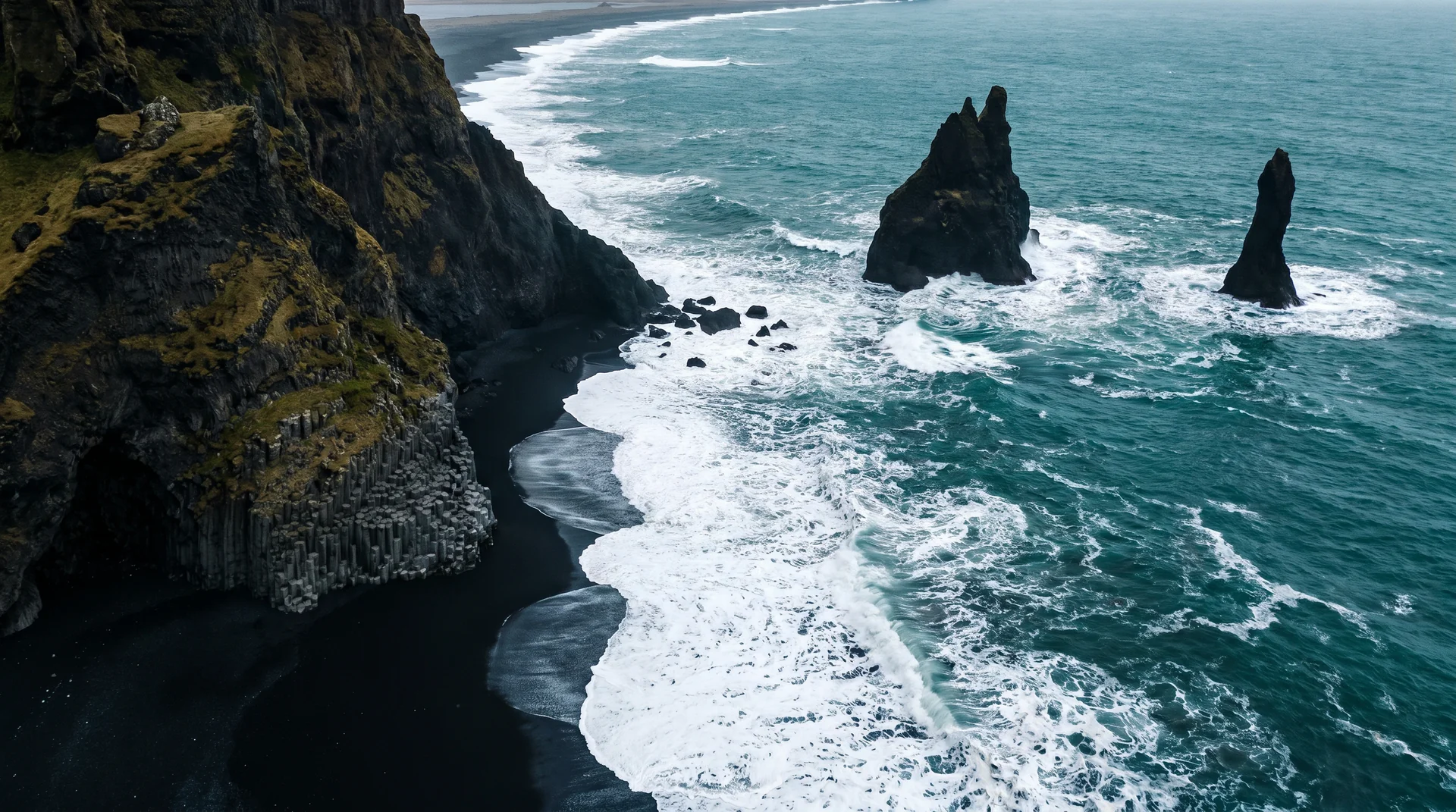
Reynisfjara
Black sand, hexagonal basalt columns, and the Atlantic — the most photographed beach in Iceland, and the most dangerous. Sneaker waves kill people here every year. Stay 30 metres back from the surf, always.
Why this place matters.
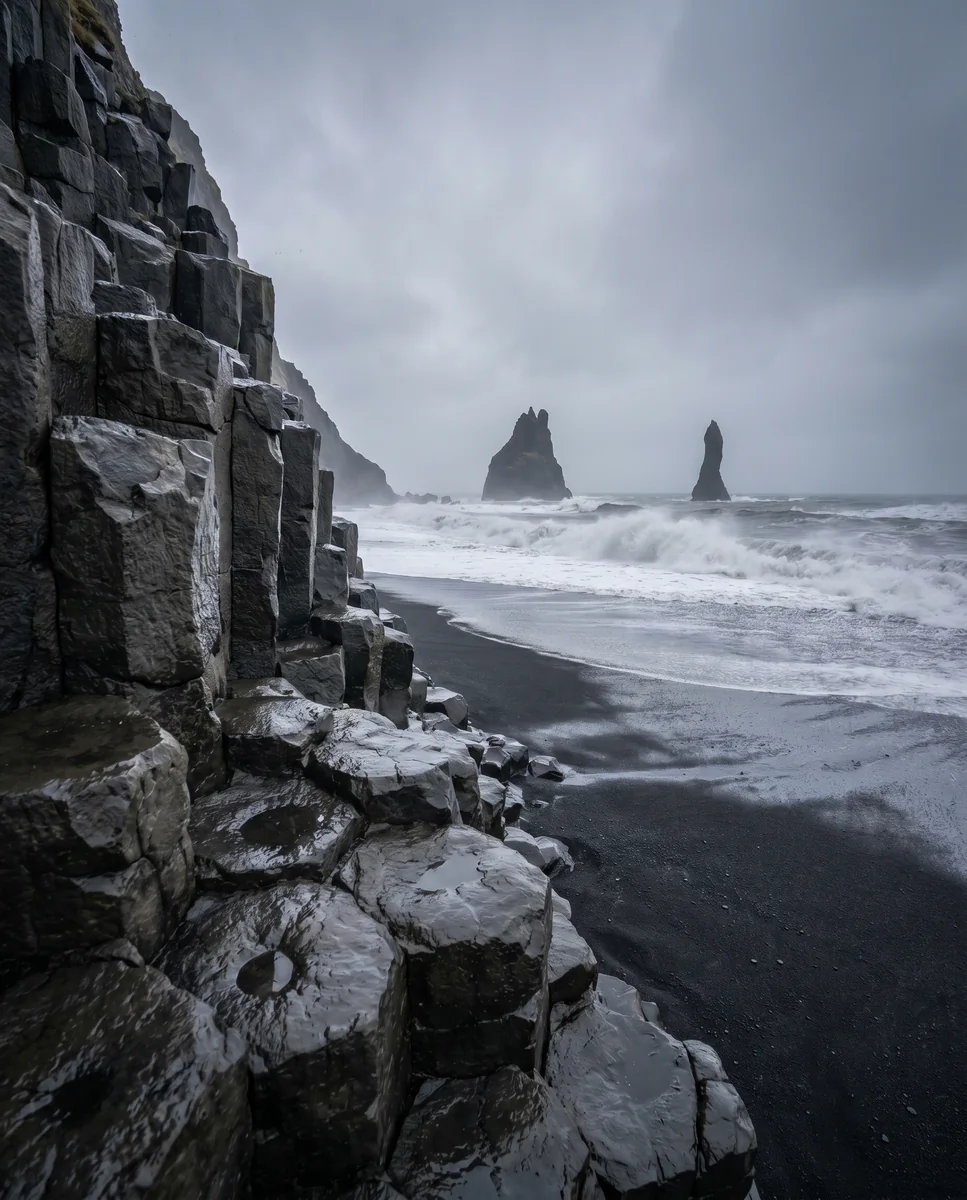
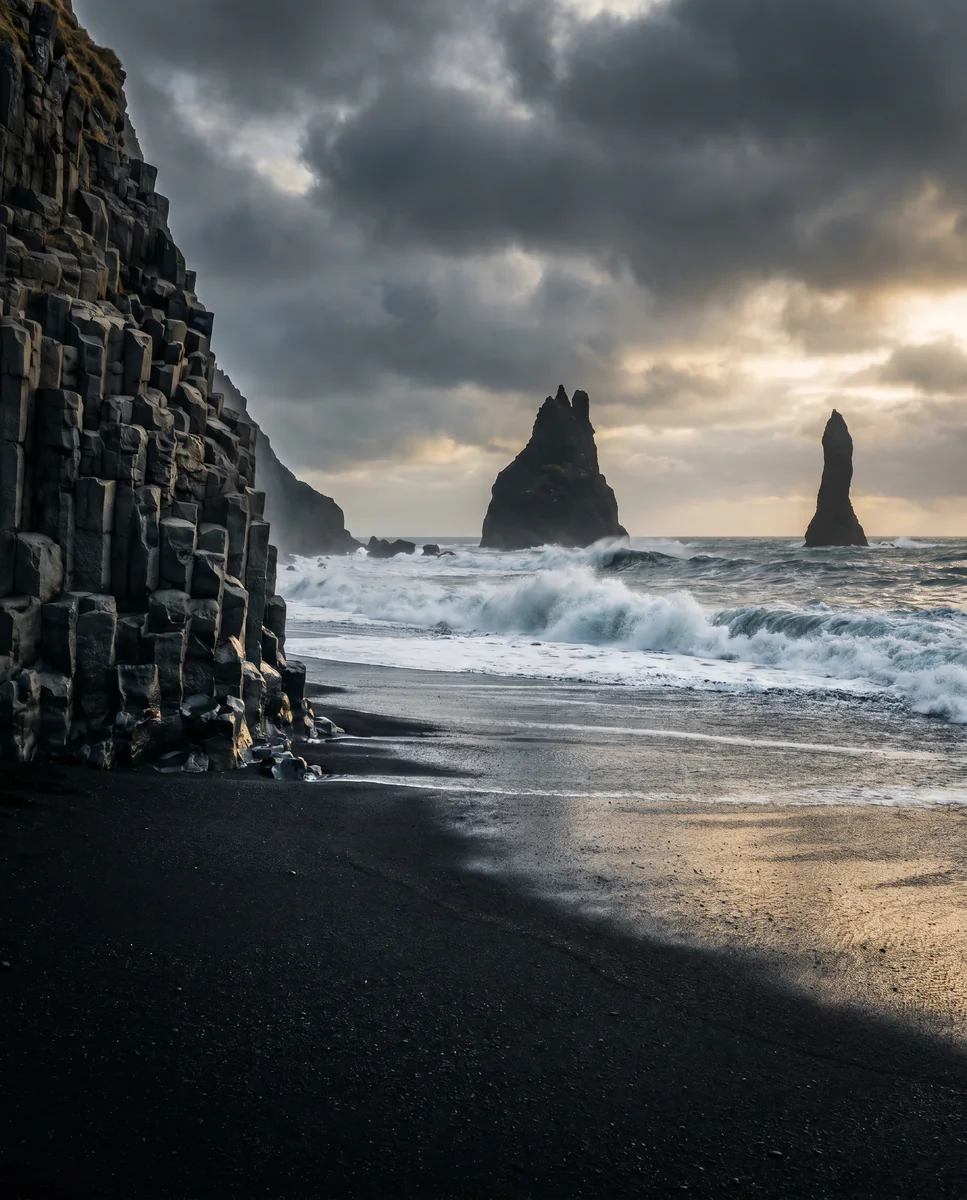
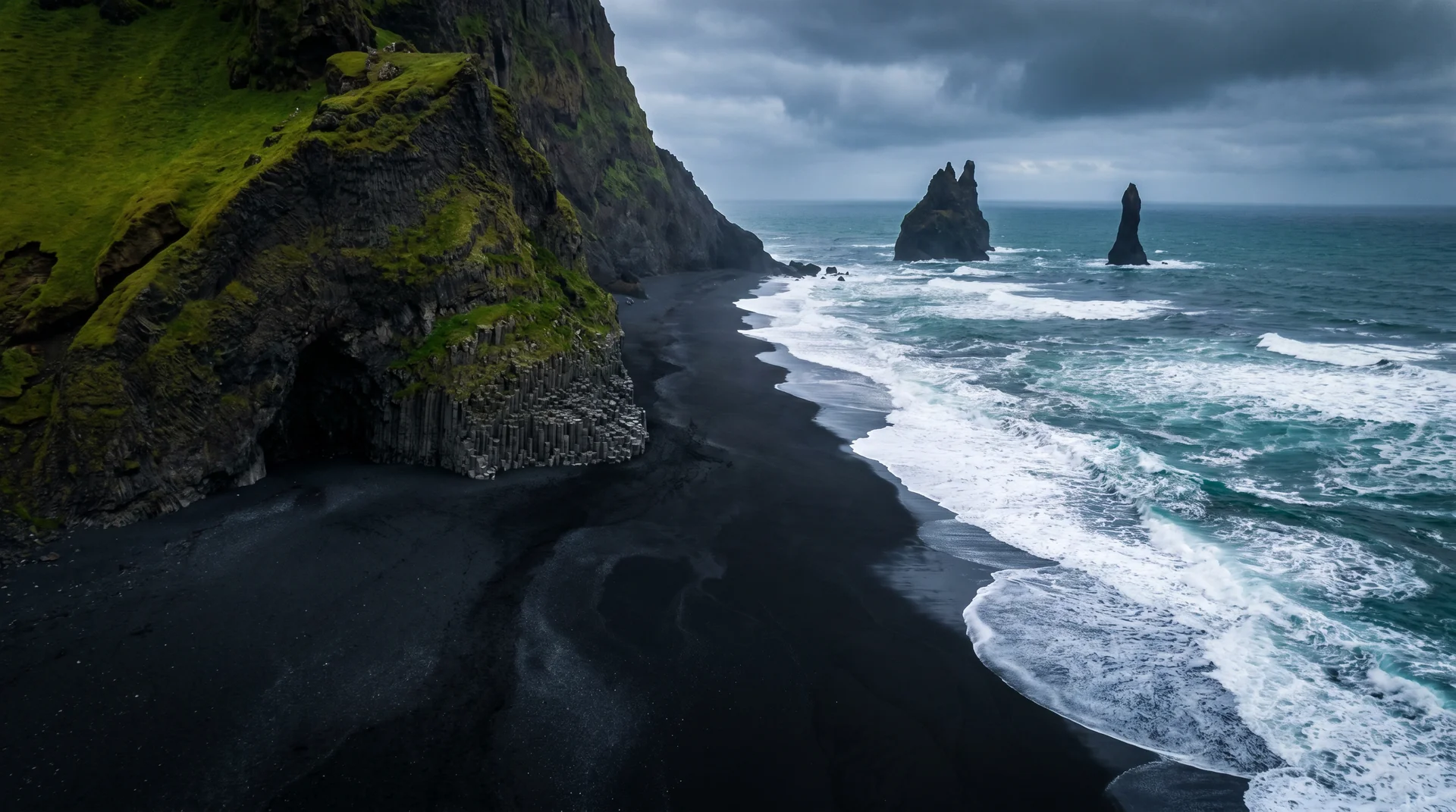
Reynisfjara is what happens when the Atlantic meets a young volcanic coast. The basalt columns at the cliff's east end are the cooled cores of an old lava flow. The sea stacks offshore — Reynisdrangar — are the eroded remnants of more of the same.
The beach is genuinely lethal. Sneaker waves — large, fast, silent — surge up the slope without visible warning swell. People die here every year. The Coast Guard now publishes a daily danger forecast at safetravel.is; red days mean don't go onto the sand. Even on green days, stay behind the warning posts. The view is just as good from the cliff above.
South Coast · 8 km west of Vík.
Last major Route 1 attraction before the long drive to Skaftafell.
Worth visiting — read the fine print.
Honest, not cynical. These are the things returning visitors tell first-timers.
Large waves arrive without visible swell. They surge up the beach silently. Stay 30 m back from the surf — always.
Daily red/amber/green. Red days = stay on the cliff above (Dyrhólaey). Even green days = back from the surf.
The cooled cores of an old lava flow. Climb them carefully — guano-slippery. The Hálsanefshellir cave is worth a peek.
Black sand becomes shrapnel above 15 m/s. Goggles or face protection if the wind picks up. Cameras suffer.
Mid-May to mid-Aug. The cliff above gives a safer alternative on rough days. Drive 10 min west.
Crowds make wave-distance compliance harder. Before 9 or after 5 is dramatically quieter and safer.
When the place is itself.
Year-round. Winter waves are typically larger; summer brings the biggest crowds. The danger is constant — the Coast Guard wave forecast is the daily check.
Light, shaped by ice.
Long exposure with the columns frame and the stacks centre. Watch the surf — don't back into a wave.
Hexagonal geometry. 35mm wide. Side-light morning is best. Don't climb the highest columns — guano-slippery.
From the cliff above (Dyrhólaey) or the cliff edge near the cave. Long lens compresses the stacks against the basalt.
Dramatic — but stay on the cliff above. Wave heights 5 m+ are normal in winter storms.
Getting there, calmly.
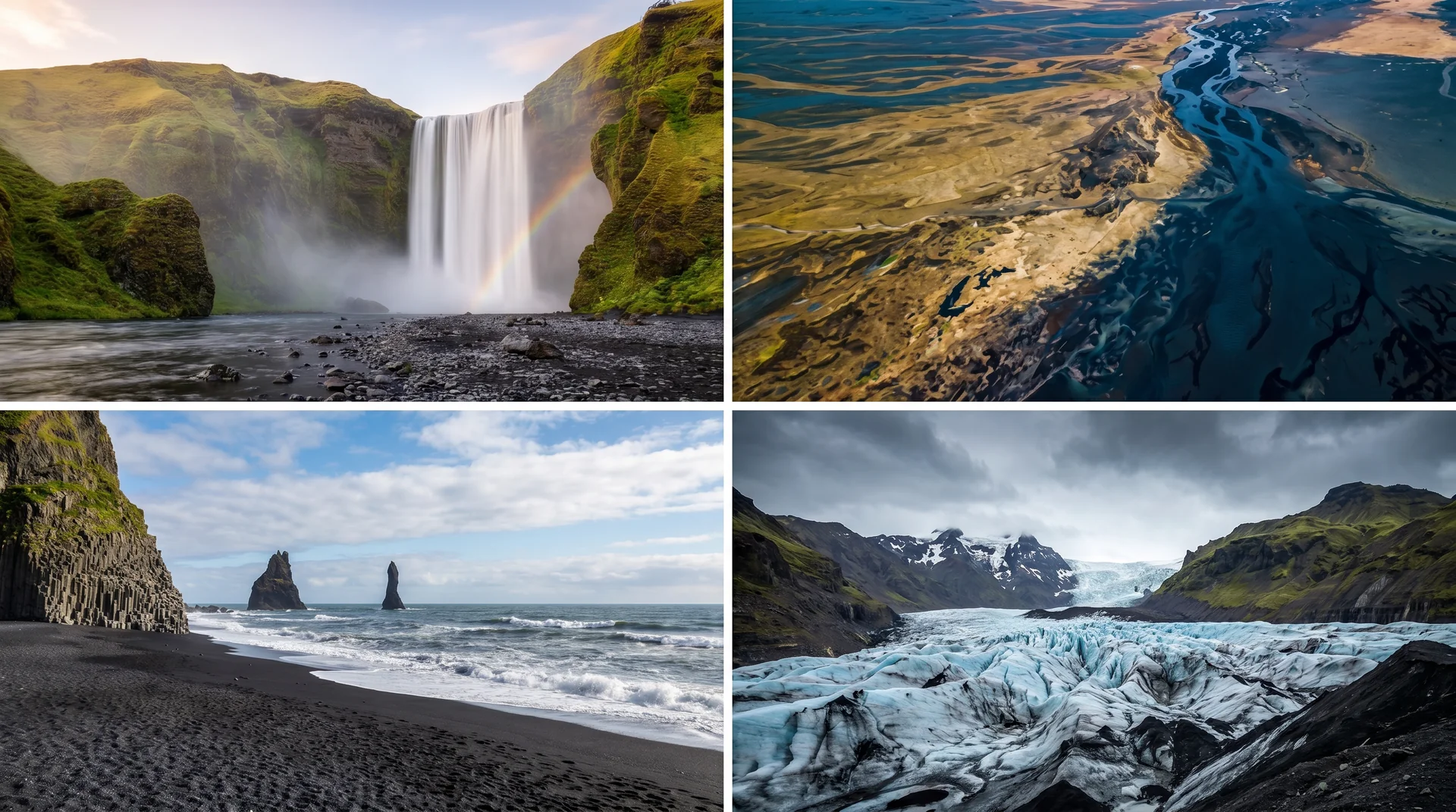
The place, four ways.
Within an hour.
- VíkVillage + last fuel · safer alt views
- DyrhólaeyArch + puffin cliff · safer from above
- SkógafossVertical curtain waterfall
- FjaðrárgljúfurMossy slot canyon
- JökulsárlónGlacier lagoon
It lives on these routes.
Read this place differently.
What the place is doing right now.
Make Reynisfjara part of your expedition.
Open it inside the Explorer to see it in context with terrain, season, and conditions — or plan a route that passes through.